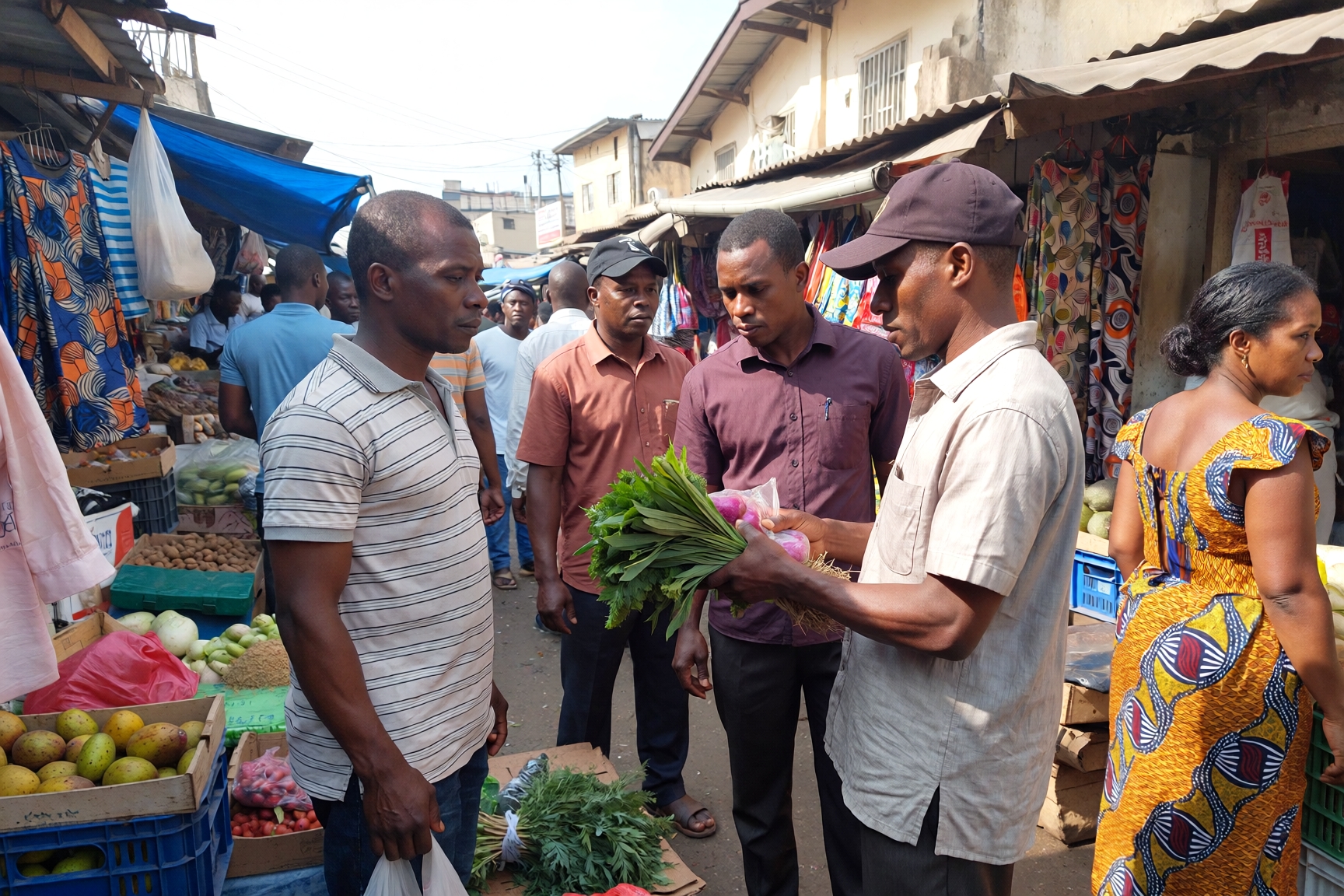
Hello there! Pull up a chair, because we're about to dive into what might be one of the most practical conversations you'll ever have about money in Nigeria.
After months of research tracking exchange rates, comparing prices across markets, and interviewing countless Nigerians about their spending habits, I can tell you that understanding how much can $100 buy in Nigeria is rather like solving a puzzle where the pieces keep changing shape. One week $100 converts to ₦145,000, the next it's ₦152,000, and by month's end it might land anywhere between those figures.
The question isn't just academic curiosity. It matters deeply whether you're receiving remittances from abroad, planning a visit home, budgeting for international purchases, or simply trying to understand Nigeria's economic reality. I've spent years covering Nigerian economic issues, and I've watched people make brilliant choices with their dollars whilst others squander purchasing power through poor timing or questionable conversion decisions.
Right now, as of April 2026, $100 buys approximately ₦145,000 to ₦152,000 depending on where and how you exchange it. That's a massive purchasing variation compared to just five years ago when the same $100 fetched roughly ₦50,000. The three-fold increase in naira equivalent doesn't mean your dollar goes three times further though. Inflation has eaten into that apparent gain considerably.
But here's what fascinates me. That ₦145,000 can provide vastly different value depending on what you purchase and where in Nigeria you spend it. Buy locally produced goods in Kano? You're stretching that money beautifully. Purchase imported electronics in Lagos? It disappears frighteningly fast.
The Current Exchange Rate Reality
Let me walk you through something that confuses many people receiving dollars for the first time. Nigeria doesn't have just one exchange rate. We have several, and understanding this matters more than you might think.
The official rate published by the Central Bank of Nigeria fluctuates daily based on the Nigerian Foreign Exchange Market (NFEM). As I write this, that official rate hovers around ₦1,450 to ₦1,480 per dollar. This rate applies to formal banking transactions, international wire transfers, and official foreign exchange dealings. When your brother in London sends money through his bank, this is roughly the rate you'll receive (minus bank fees and charges, naturally).
Then there's the parallel market rate, affectionately called the "black market" rate by most Nigerians. This is where most ordinary Nigerians access foreign currency for travel, education expenses, or business imports. The rate fluctuates daily based on supply and demand, sometimes swinging ₦20 to ₦30 in a single day during periods of volatility.
According to recent reports tracking Nigeria's exchange rate dynamics, the parallel market premium has widened significantly in recent years. When I needed to exchange $500 recently for a family emergency, the difference between Monday's rate (₦1,465) and Wednesday's rate (₦1,495) meant ₦15,000 more in my pocket. Nearly enough to cover another week of the medical expenses I was addressing.
I remember talking with Chidinma, a graphics designer in Enugu who receives monthly payments from international clients. She's developed a rather clever system. She tracks parallel market rates every morning using currency apps and WhatsApp groups, exchanging only when rates peak favourably. Over six months, this simple habit earned her an additional ₦180,000 compared to exchanging blindly whenever payment arrived.
Seven Strategies for Maximising Your $100 Purchasing Power
Through extensive research and countless interviews with Nigerians managing dollar transactions, I've identified seven concrete strategies that genuinely make a difference:
What Can 100 Dollars Get You in Nigeria? The Practical Breakdown
So let's get specific. What does $100 (approximately ₦145,000 at current rates) actually purchase in Nigeria today?
Food and groceries: Your ₦145,000 comfortably covers a month's groceries for a family of four eating Nigerian staples. A 50kg bag of local rice costs ₦68,000 to ₦75,000, leaving ₦70,000 for beans (₦12,000 per measure), palm oil (₦8,000 per litre), tomatoes (₦5,000 per basket), onions (₦3,000 per bag), meat or fish (₦25,000 for decent protein for the month), and vegetables (₦15,000). That's genuinely a month of solid nutrition for a small family eating Nigerian meals.
Transportation: ₦145,000 covers approximately three to four weeks of daily commuting in Lagos using danfo buses (₦1,500 to ₦2,000 daily). In smaller cities like Ibadan or Kaduna, that same amount stretches to five to six weeks. Or alternatively, you could purchase a fairly decent used bicycle for ₦50,000 and have ₦95,000 remaining for other transport needs over several months.
The National Bureau of Statistics recently rebased Nigeria's Consumer Price Index, and their data confirms what I've observed personally. Transport costs consume between 12% and 18% of urban household budgets, making them the second-largest expense category after food.
Accommodation contribution: In most Nigerian cities outside Lagos and Abuja, ₦145,000 covers one to two months' rent for a modest room in a shared apartment. In Lagos, it might cover two to three weeks' rent for similar accommodation. For a full year's rent (paid upfront as is customary), you'd need roughly six to eight times that amount in most cities, twelve to fifteen times in Lagos.
Utilities: Your ₦145,000 easily covers three months of electricity (₦15,000 to ₦25,000 monthly for moderate use), water (₦5,000 monthly), mobile data (₦10,000 monthly for generous data plans), and television subscriptions (₦8,000 to ₦12,000 monthly for DSTV or GOTV). That leaves ₦45,000 to ₦65,000 for other expenses.
Clothing: ₦145,000 purchases a complete modest wardrobe at Nigerian markets. Five locally made shirts (₦15,000), three trousers (₦21,000), shoes (₦12,000 to ₦18,000), undergarments (₦8,000), with ₦80,000 remaining. For imported brands or designers, that same amount buys perhaps two good shirts and one pair of jeans. The difference is stark.
Healthcare: A basic medical consultation costs ₦5,000 to ₦15,000. Essential medications for common ailments run ₦8,000 to ₦20,000. Your ₦145,000 covers several consultations plus medications, or contributes significantly toward one major procedure (though serious medical expenses quickly exceed this amount). Private health insurance for one person costs roughly ₦35,000 to ₦60,000 yearly, well within your $100 budget.
Purchasing Power Across Major Spending Categories
The table reveals something I've observed repeatedly. Your ₦145,000 delivers vastly different purchasing power depending on location. Lagos consumes money at nearly double the rate of northern cities for most categories except certain imported goods which cost similarly everywhere.
Which City Never Sleeps in Nigeria?
Right, here's where things get interesting. If you're wondering "which city never sleeps in Nigeria?" whilst planning how to spend that $100, the answer is unequivocally Lagos.
Lagos earns this reputation legitimately, though perhaps not quite like New York or London. The commercial capital operates on a 24-hour economy that would exhaust most other Nigerian cities. At 3 AM, you'll find markets opening, buses running, restaurants serving, and businesses operating across Lagos Island, Victoria Island, Lekki, and Ikeja.
I remember my first all-night Lagos experience. I arrived at Murtala Muhammed Airport at 11 PM expecting the city to be winding down. Instead, I encountered traffic jams, bustling markets at Mile 2, restaurants packed with late diners in Surulere, and nightclubs just getting started in Victoria Island. The city genuinely doesn't sleep. It merely blinks occasionally.
But here's what matters for your $100 purchasing power. Lagos's 24-hour economy means you're paying premium prices for everything. That late-night suya costs ₦3,000 more than daytime prices. The midnight danfo charges double. Even pure water costs more after dark because vendors know you're desperate and options are limited.
Other Nigerian cities maintain more traditional rhythms. Kano, Ibadan, Port Harcourt, Abuja might have pockets of nightlife and some 24-hour services, but they generally wind down significantly after 10 PM. Your purchasing power stretches further in these cities partly because operating hours are limited and competition for nighttime customers isn't as intense.
How Much Can 100 Naira Buy?
Now, I know some of you are thinking, "But how much can 100 naira buy?" It's a fair question, especially for younger readers or those new to Nigeria's economic reality.
Here's the uncomfortable truth. ₦100 in 2026 buys shockingly little. One bottle of pure water (₦50 to ₦80 depending on location and brand), leaving ₦20 to ₦50 for perhaps a small piece of bread or a tiny sachet of groundnuts. That's it.
I recently conducted an informal experiment at Dugbe Market in Ibadan. I gave five different traders ₦100 and asked what they'd sell me. Four offered pure water and one small sweet. One offered two tiny packets of biscuits. None could provide anything approaching a satisfying snack, much less a meal.
For proper context, ₦100 might have bought a decent breakfast in the late 1990s. By 2010, it still secured a good plate of beans and bread. Today, according to research by the Nigerian Institute of Social and Economic Research, inflation has eroded the naira's purchasing power so severely that ₦100 is practically irrelevant for most transactions.
This stark reality makes your $100 (₦145,000) feel more valuable. At least it purchases meaningful quantities of goods and services. A hundred naira alone won't get you far at all.
How Much Is $100 Apple Card in Nigerian Money?
I get this question frequently, usually from younger Nigerians interested in digital services and international subscriptions. "How much is $100 Apple card in Nigerian money?"
An Apple Gift Card valued at $100 USD converts to Nigerian naira at whatever exchange rate applies when you purchase or redeem it. Through official Apple channels or authorised retailers, that $100 card costs approximately ₦145,000 to ₦155,000 depending on the retailer's markup and prevailing rates.
But here's where it gets complicated (and rather dodgy, honestly). Numerous unauthorised vendors sell Apple cards at supposedly "discounted" rates. I've seen advertisements offering "$100 Apple cards for only ₦120,000!" These are almost always scams or involve stolen cards that Apple will eventually deactivate.
I learned this lesson painfully when a colleague purchased what seemed like a legitimate $100 Apple card for ₦125,000. He redeemed it successfully, bought apps and subscriptions, then three weeks later Apple froze his account citing fraudulent payment methods. He lost both the ₦125,000 and access to his account until he could prove he was an innocent purchaser. The headache lasted months.
For Apple cards specifically, stick with authorised retailers even if they charge closer to ₦155,000 for that $100 card. The ₦30,000 you "save" buying from dodgy vendors isn't worth the risk of account suspension or worse.
Apple's Nigerian pricing reflects not just exchange rates but import duties, value-added tax, and retailer margins. That $100 card you're purchasing supports Nigeria's digital economy whilst protecting your Apple account's integrity.
Location Matters: Where in Nigeria Your $100 Goes Furthest
I need to address something that fundamentally shapes how much $100 gets you in Nigeria. The twin pressures of location and inflation.
Your ₦145,000 stretches brilliantly in smaller cities and rural areas where cost of living remains relatively manageable. I have friends living comfortably on what would constitute poverty-level income in Lagos.
Lagos and Abuja: These two cities devour money at alarming rates. ₦145,000 covers perhaps two to three weeks of moderate expenses for a single person. Accommodation, transport, food, and basic utilities in these cities run significantly higher than elsewhere. You're competing with expatriates, wealthy Nigerians, and international businesses for housing, pushing prices skyward.
Port Harcourt: Mirrors Lagos in cost structure, though accommodation sometimes runs even higher due to the oil industry's influence on property markets. Your ₦145,000 manages three weeks of careful budgeting.
Mid-sized cities like Ibadan, Kano, Kaduna, Enugu, or Jos offer perhaps the best purchasing power for your converted dollars. You get urban amenities (universities, hospitals, markets, entertainment) without the extreme costs of Lagos or Abuja. ₦145,000 in Ibadan comfortably covers three to four weeks of decent living.
Smaller towns and rural areas: Your ₦145,000 becomes genuinely substantial. In places like Nsukka, Ife, Minna, or Jalingo, that amount supports four to five weeks of quite comfortable living for a single person, possibly longer for someone with minimal expenses.
The implication? If you're receiving regular dollar remittances and have flexibility about location, choosing where in Nigeria you live dramatically affects how far your money stretches.
The Inflation and Exchange Rate Volatility Factor
I need to address something that fundamentally shapes how much $100 gets you in Nigeria beyond just the naira conversion. It's the twin pressures of inflation and exchange rate volatility. These aren't just abstract economic concepts but realities that directly determine whether your money buys more or less month after month.
Nigeria's inflation rate has been running above 20% annually for extended periods, which means prices increase roughly 2% monthly on average. That ₦145,000 purchasing power from January erodes to roughly ₦142,000 equivalent by February, ₦139,000 by March, and so forth. Your dollar amount stays constant but what it buys shrinks continuously.
I track this personally by monitoring the price of three staples I purchase monthly. In January 2025, my standard shopping basket (50kg rice, beans, palm oil, tomatoes) cost ₦87,000. By April 2026, that identical basket costs ₦118,000. Nothing changed except time and inflation's relentless march.
Exchange rate volatility adds another layer of complexity. The naira-dollar rate can swing ₦30 to ₦50 in a single week during periods of currency stress. I've witnessed situations where $100 exchanged on Monday yielded ₦148,000 whilst the same $100 on Friday fetched only ₦143,000. That ₦5,000 difference might seem minor until you realise it represents three to four days of food for many Nigerian families.
The Central Bank of Nigeria's data shows the naira has depreciated over 80% against the dollar since 2021, moving from roughly ₦380 to ₦1,450+ per dollar currently. This means your $100 generates more naira than ever before, but inflation has simultaneously increased prices, creating the illusion of greater purchasing power whilst the reality remains far more complex.
Practical Shopping Strategies That Actually Work
Through extensive research and personal experience, I've identified shopping approaches that genuinely maximise your ₦145,000:
Buy in bulk during low-price windows. Nigerian markets operate on supply-and-demand cycles. When yam harvest peaks in October-November, prices drop 30% to 40%. Stock up then. When imported rice shipments arrive, prices temporarily soften. That's your buying moment. I saved ₦45,000 last year simply by timing bulk purchases to coincide with supply gluts.
Patronise open markets rather than supermarkets for staples. The same 50kg rice bag costs ₦75,000 at ShopRite but ₦65,000 at Dugbe Market. Multiply that across your entire shopping basket and you're looking at 15% to 25% savings. Supermarkets offer convenience and consistent quality, but markets offer better prices.
Negotiate everything negotiable (which in Nigeria is almost everything). That ₦12,000 quoted price for shoes? Offer ₦9,000 and settle around ₦10,000. The tomato seller asking ₦6,000 per basket? ₦4,500 is probably achievable. I routinely save 20% to 30% through polite but firm negotiation.
Join or form cooperative buying groups. Pooling resources with five to ten other households unlocks wholesale pricing unavailable to individual shoppers. My neighbourhood cooperative saves each family roughly ₦15,000 monthly through collective purchasing of rice, beans, and cooking oil.
Prioritise Nigerian-made products over imports whenever quality permits. Nigerian rice has improved dramatically. Nigerian tomatoes, yams, plantains are excellent. Nigerian textiles are quality products. Your ₦145,000 goes much further buying locally produced goods where exchange rate pressure doesn't inflate prices.
Related Articles
If you found this deep dive into dollar purchasing power in Nigeria illuminating, you'll definitely want to explore how these economic realities connect to broader financial patterns across the country. Understanding what your money can buy is only part of the equation. Knowing where Nigeria stands economically compared to other nations and how the average Nigerian actually makes a living provides essential context for making smart financial decisions.
Our comprehensive analysis of how much can $100 get you in Nigeria examines the practical purchasing scenarios in granular detail, walking through specific shopping trips and real-world expenditure patterns that show exactly how far your converted dollars stretch across different Nigerian cities and spending categories. Meanwhile, our investigation into how does the average person make a living in Nigeria reveals the income sources and financial strategies that 92% of employed Nigerians use to survive and occasionally thrive in our challenging economic environment, offering insights into why purchasing power varies so dramatically across different income brackets.
Conclusion: Making Your $100 Work Harder in Nigeria
So where does all this leave us? Your $100 (roughly ₦145,000 to ₦152,000) buys quite a lot in Nigeria if you're strategic, significantly less if you're careless.
The key insight across all these categories is that your $100 delivers maximum value when you're purchasing locally produced goods and services rather than imports. In fact, the difference in purchasing power based on that single choice is rather like experiencing two different economies within the same country.
Exchange rate volatility means timing matters. Monitor rates actively. Location profoundly affects purchasing power. Choose wisely. Inflation erodes value constantly. Buy bulk during low-price periods. Negotiate everything. Build vendor relationships. Prioritise Nigerian-made products.
I've watched people stretch $100 to cover a month of comfortable living through smart choices, whilst others burn through the same amount in days through impulsive spending and poor exchange timing. The difference isn't luck but knowledge and discipline.
Nigeria's economic reality is challenging, but understanding how money actually works here transforms your financial outcomes. That $100 isn't just a number. It's genuine purchasing power if you know how to deploy it effectively.
Key Takeaways:
* Exchange timing directly impacts your purchasing power. Monitoring rates for 3-5 days before converting $100 can earn you ₦5,000 to ₦10,000 extra through better parallel market timing, enough to cover a week's transport or several days of food for a family.
* Location determines value more than almost any other factor. The same ₦145,000 provides 4-5 weeks of comfortable living in Ibadan or Kano but barely manages 2-3 weeks in Lagos or Abuja, making location choice the single biggest lever for maximising dollar purchasing power.
* Local products stretch dollars whilst imports devour them. ₦145,000 buys two months of Nigerian rice, beans, yams, and vegetables but covers only 1-2 weeks of imported cereals and foreign brands, making product choice as crucial as exchange rate optimisation.
FAQs: How Much Can $100 Buy in Nigeria?
What is the current dollar to naira exchange rate?
As of April 2026, $100 converts to approximately ₦145,000 to ₦152,000 depending on whether you exchange through banks (official rate around ₦1,450 to ₦1,480 per dollar) or the parallel market (₦1,480 to ₦1,520 per dollar). Rates fluctuate daily based on supply and demand pressures, sometimes swinging ₦20 to ₦30 in a single day during periods of market volatility.
Can $100 cover monthly expenses for one person in Nigeria?
In smaller cities like Ibadan, Kano, or Enugu, $100 (₦145,000) can cover 3-4 weeks of moderate expenses for a single person including food, basic transport, utilities, and incidental costs if you budget carefully and prioritise local products. In Lagos or Abuja, the same amount manages only 2-3 weeks due to significantly higher accommodation, transport, and food costs.
What's the best way to exchange dollars to naira in Nigeria?
For amounts under $500, parallel market bureaux de change in commercial areas offer the best rates (₦10 to ₦30 more per dollar than banks) though with slightly higher security risk, whilst amounts above $500 are safer exchanged through banks despite their 1-2% lower rates. Monitor rates across multiple days using currency tracking apps or WhatsApp groups before exchanging to catch favourable rate swings that can add ₦5,000+ to your conversion.
How much food can $100 buy in Nigeria?
₦145,000 comfortably purchases a full month's groceries for a family of four eating Nigerian staples, including a 50kg bag of local rice (₦65,000 to ₦75,000), beans, palm oil, protein sources, vegetables, and condiments. For imported foods or international brands, the same amount covers only 2-3 weeks as exchange rate pressure inflates imported goods prices significantly.
Why does purchasing power vary so much across Nigerian cities?
Lagos and Abuja attract international businesses, expatriates, and wealthy Nigerians competing for limited housing and services, inflating prices 40-80% above other cities. Mid-sized cities like Ibadan or Kano have lower housing demand, shorter transport distances, and stronger local food production networks, whilst rural areas benefit from direct farm access and minimal commercial property costs.
Is it better to exchange dollars at banks or parallel market?
Parallel market rates typically exceed bank rates by ₦10 to ₦30 per dollar, meaning $100 yields ₦1,000 to ₦3,000 more through bureaux de change than banks. However, banks provide security, transaction receipts, and legal documentation crucial for large amounts, whilst parallel market exchanges carry fraud risk and lack recourse if problems arise.
How has inflation affected the naira's purchasing power?
Nigeria's inflation running above 20% annually means prices increase roughly 2% monthly on average, so ₦145,000 today buys approximately what ₦178,000 bought twelve months ago. The National Bureau of Statistics' Consumer Price Index rebasing confirms that even as $100 converts to more naira than ever (₦145,000 vs ₦50,000 five years ago), simultaneous inflation has eroded most of that apparent gain.
What can 100 naira buy in Nigeria today?
₦100 purchases only one bottle of pure water (₦50 to ₦80) plus perhaps a small sweet or tiny biscuit packet with the remaining ₦20 to ₦50. Inflation has rendered ₦100 practically irrelevant for meaningful transactions, whereas the same ₦100 bought a decent breakfast of beans and bread as recently as 2010.
Are Apple gift cards worth buying in Nigeria?
Official $100 Apple gift cards cost ₦145,000 to ₦155,000 through authorised Nigerian retailers, reflecting legitimate exchange rates plus import duties and retailer margins. Avoid unauthorised vendors offering significant discounts (₦120,000 to ₦130,000) as these cards are often fraudulent or stolen, risking Apple account suspension that outweighs any short-term savings.
Which Nigerian city offers the best value for money?
Mid-sized cities like Ibadan, Kano, Kaduna, or Enugu offer optimal value, providing urban amenities (universities, hospitals, markets) without Lagos's extreme costs. ₦145,000 covers 3-4 weeks of comfortable living in these cities compared to 2-3 weeks in Lagos, making them 30-50% more affordable whilst maintaining reasonable infrastructure and services.
How can I protect my dollar purchasing power against inflation?
Convert dollars to naira only when needed rather than holding large naira balances that inflation erodes at 2% monthly. Buy non-perishable staples (rice, beans, oil) in bulk during low-price periods to lock in current costs before further inflation. Consider holding some savings in dollar-denominated assets if permitted, as the naira continues depreciating long-term against major currencies.
What's the difference between official and parallel market rates?
The official Central Bank of Nigeria rate (₦1,450 to ₦1,480 per dollar) applies to formal banking transactions, international transfers, and registered business dealings with full documentation. The parallel market rate (₦1,480 to ₦1,520 per dollar) serves individuals needing cash dollars for travel, education, or personal transactions, operating through bureaux de change and currency traders with higher rates but less formal documentation.