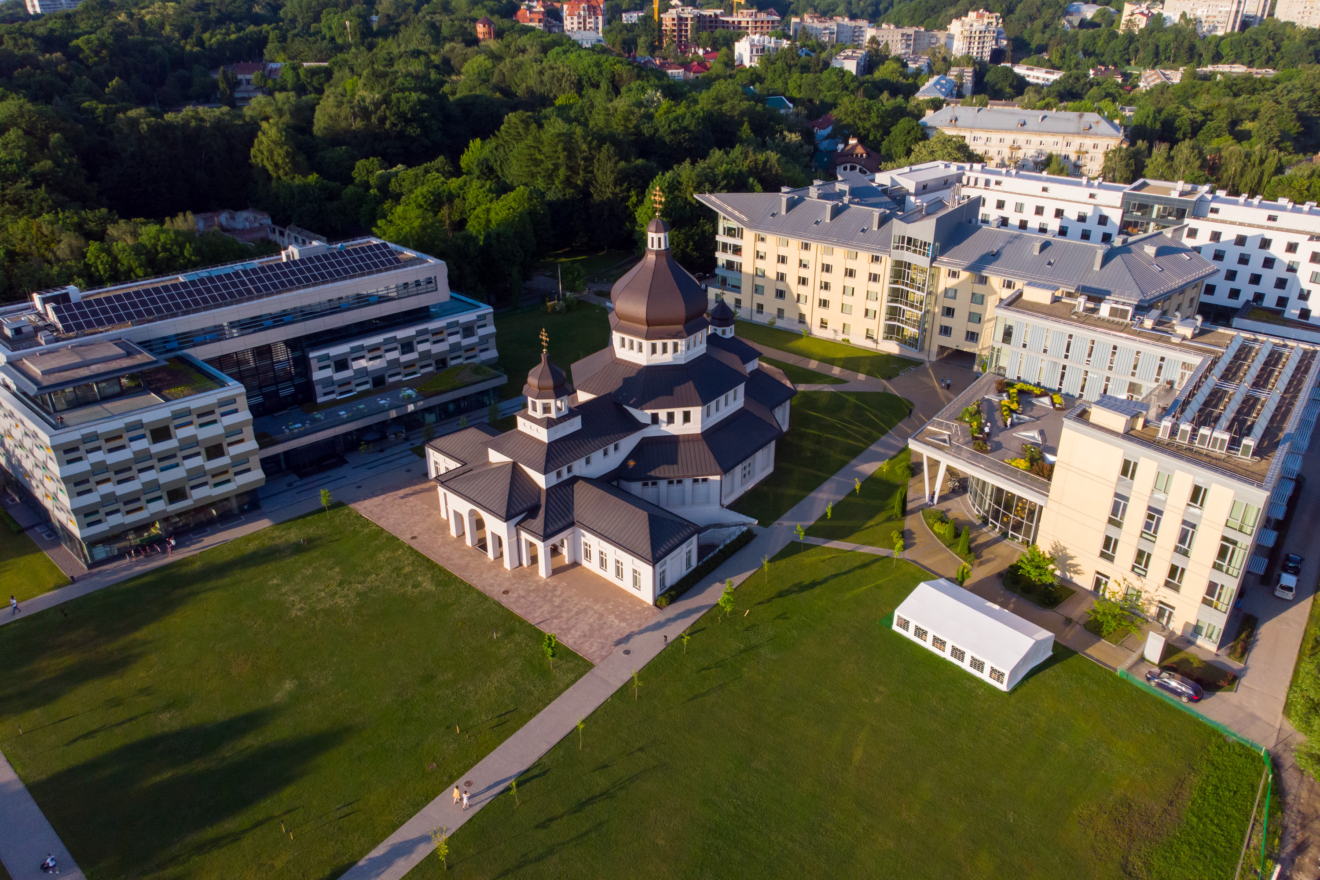
What can we learn from American international universities?
From extreme cuts to research funding and attacks on academic freedom to interference in curricula, faculty firings, and student expulsions, colleges and universities in the United States are confronting alarming and unprecedented hostility from the federal government. At the same time, institutions are also grappling with a disturbing loss of faith in higher education among large swaths of the American public. Given these challenges, can anything be learned from leaders of US-style universities abroad who have regularly surmounted existential threats?
American international universities offer a broad-based US liberal education with classes taught in English. Many are accredited in the United States and some have partnerships with US institutions. They are not associated with the US government. Many of us who have led American international universities have learned a great deal about crisis management and, in the process, about what is special and of enduring value in the American model of higher education. We have had to in order to survive coups, invasions, terrorism, Islamic insurgency, corruption, natural disasters, and national economic collapse.
I have had the challenge and privilege of leading universities on three continents: Africa, North America, and, most recently, Europe, at the American University in Bulgaria (AUBG). During my career, and in various forums, I have learned and shared lessons with other presidents of American international universities. In April 2025, in a most provocative webinar hosted by Jonathan Becker, executive vice president and vice president for academic affairs at Bard College and vice chancellor of the Global Higher Education Alliance for the 21st Century, the leaders of the American University of Beirut in Lebanon, Parami University in Myanmar, the Ukrainian Catholic University, and I discovered that our varied experiences had taught us remarkably similar lessons and led us to similar conclusions about the strengths and promise of our undertakings -- and about survival as an academic institution in countries facing destabilizing challenges. I would like to share some of the lessons with you in these unprecedented and perilous times.
Recently, as higher education leaders have responded to such issues as antisemitism and threats to freedom of speech on campus, we have witnessed their sometimes uncertain and flailing attempts to explain and justify their institutions' actions and even existence to Congress, to the press, and to their different constituencies and audiences. Clearly, these leaders were out of practice. Perhaps this is because in the United States, colleges and universities have had little need to publicly defend and fully live their formal mission statements, which lay out the values and purpose of an institution. At American international universities, this is not a luxury we have ever enjoyed.
American universities in cultures far from home have had to be very clear, internally and externally, as to why we exist, what we are doing, what we hope to achieve -- and how and why all that matters. We are, as Dmytro Sherengovsky, vice rector for outreach and social engagement at Ukrainian Catholic University (UCU) reminds us, "communities of purpose," and it is that purpose and understanding of our mission that drives us. Possessing a clear sense of leadership is also crucial. "At UCU," Sherengovsky says, "we believe that these moments of darkness demand leaders who not only endure but who also need to illuminate."
The American University of Nigeria (AUN), where I was president from 2010 to 2017 and then again from 2021 to 2022, is explicit about its mission to be "Africa's development university" and to ensure that the local community and region, much of which is impoverished, benefit from university programs and projects.
At AUN, the mission necessarily drove how we developed curricula, recruited students and faculty, and explained ourselves not only to students and parents but to our skeptical and sometimes hostile host societies, which were unclear about and at times suspicious of the purpose of an American education. At AUN, for several years, our very survival depended on believing in, telling, and living a coherent and compelling story. As we were threatened by Boko Haram, a violent Islamist insurgent group whose Hausa name translates loosely as "Western education is evil," the mutually supportive and trusting relationship we developed with our local community kept us safe and allowed us to live our development mission.
From its beginnings in 2017, Parami University has persevered through extreme challenges in Myanmar. In 2021, the military took over the country, leading to an ongoing civil war. Since the coup, Parami has continued to serve students in Myanmar by operating online, focusing on its mission to educate "underserved students in developing countries so that they will become effective change agents and contributing members of the global community."
"We have been hit with so many crises," says President Kyaw Moe Tun. "The first is, of course, that of national identity, the political situation, and the displacement of people." Another crisis was the September 2024 monsoon rains that caused devastating floods in Myanmar, killing hundreds of people, affecting more than a million others, and doing widespread damage including to crops. Then in March 2025, the nation experienced its most catastrophic earthquake in more than a century. The quake destroyed nearly fifty thousand buildings, killed close to four thousand people, and left hundreds of thousands homeless.
Tun's response as Parami's president to these disasters? "I communicated. I reminded myself of our mission and reminded the trustees, my faculty, students, and, not least important, staff -- I constantly reminded them of the mission, of why we exist," Tun says. "It consolidated the entire Parami University faculty behind one mission, really helping us get through all the challenges."
At the 159-year-old American University of Beirut (AUB), President Fadlo R. Khuri has come to the same conclusion about the importance of mission. "When I took this job in 2015," he says, "it was my sense as a trustee that perhaps while we did research, patient care, community service, and teaching increasingly well, perhaps the mission was not as much a focus of what we did and why we did it. We didn't ask 'why,' often enough: Why do we do things, and how do we get to where we are supposed to?"
Since Khuri took the helm, AUB has focused on a mission of serving a broader community, tripling financial aid over an eight-year period to make the university more accessible to students who had never previously considered an AUB education attainable. The efforts have embodied the university's motto, which comes from John 10:10: "That they may have life, and have it more abundantly."
" 'They' needed to apply to not only our students and alumni, who did very well with an AUB degree, often getting high-paying jobs and founding companies, but to the communities they came from," Khuri says. The focus on mission, he explains, "proved prescient when a series of overlapping crises hit Lebanon," allowing AUB to offer support to those affected.
Achieving consensus about your guiding mission, being consistent, and always being on message is vital for internal morale and for your relationship with your host society. Scarcely a day went by at AUBG when I did not mention our mission. People both outside and inside the institution need to know who you are and the purpose you represent.
All three leaders and I agree that it is essential to develop the best possible relationship with your host community, including your fellow universities. A "town versus gown" mentality is both untenable and a recipe for disaster. While it takes valuable time and work to become deeply engaged with your fellow townspeople, it is time well spent. It is essential.
AUN was only six years old when I became president there. Situated in rural, desperately impoverished, largely Muslim northeastern Nigeria, AUN might not have survived financially or physically if we hadn't put a community network in place before our crisis began. (We also took the precaution of hiring and training our own armed security force of more than six hundred people.)
In 2012, the Nigerian government removed the fuel subsidies it had been providing citizens. Nationwide strikes broke out. In response, AUN spearheaded the creation of the Adamawa Peace Initiative (API), bringing together local Muslim and Christian leaders, businesspeople, and youth leaders for the first time. We agreed on a set of values and goals that guided our work for five years:
We agreed that these community leaders best understood the needs of our poor community. Then, based on their concerns, we agreed that our first project would focus on the most vulnerable youth. Through the creation of our Feed and Read program, we worked to reduce hunger and increase literacy among children on the street (the Almajiri), who were easily recruited by Boko Haram, which was taking advantage of the national upheaval to become more powerful. We hired local women to cook a daily meal, and our students taught the children literacy and numeracy.
We also established the Peace through Sports program, which brought together youth from different cultural and religious backgrounds to play football. Most participants were identified by API members. Our Technology-Enhanced Learning for All initiative helped teach more than twenty thousand internally displaced children how to read via our radio program. The curriculum for the radio program was developed in an AUN media class. In fact, all these efforts were fully integrated into newly established community-based university development courses, in which students, faculty, and sometimes staff identified a local problem -- hunger, illiteracy, environmental degradation, poverty -- and faculty then developed a curriculum focused on proposed solutions.
Additionally, our API members told us that local hospitals had unreliable internet service and that health care providers needed access to research on emerging diseases. In response, AUN started the Library on a Flash (Drive) program, through which our librarians uploaded the desired articles and books onto flash drives and then sent them out to hospitals and clinics in the region.
Thus, even before Boko Haram intensified its rampage of terrorizing regional communities with bombings and kidnappings, we had developed strong and trusting relationships with local leaders. They were the ones to alert us about the intensifying threat of Boko Haram not far from us.
I will never forget the call in fall 2014 from the emir of Mubi, a city to the north of us: "Margee, can you please come and bring the API members with you?"
We all drove together in a bus, and when we arrived, we found a room full of about five hundred women and girls. I asked our translator, "Where are the boys and men?"
One of the women said, "Boko Haram killed our husbands and kidnapped our boys."
This situation served as an early warning that allowed us to get ready for what was coming. In the bus on the way home, Imam Dauda Bello, a prominent member of API, said to me: "We must be obsessed with peace," and we were, for years.
When later in 2014 close to 300,000 refugees poured into our small city to flee Boko Haram's escalating destruction of mass bombings and kidnappings, we had strong relationships to draw upon and an institutional structure to help us feed and house the refugees. When a local university north of us was destroyed, we opened our classrooms and residence halls to its students so that they could successfully conclude their school year.
This community model is the one we used in the United States at Dickinson College, when I became president there in 2017. Together with the diverse community of Carlisle, Pennsylvania, including the US Army War College, nongovernmental organizations, religious and community leaders, and the police chief, we created the Carlisle Action Network to support educational programs for youth. During the COVID-19 pandemic, we expanded to more than sixty partners to provide online tutoring and educational support for youth, as well as to offer food assistance and expanded health care access to the broader community. This was such a successful model of cooperation that the network won the Pennsylvania Heart and Soul Hero Award.
In Ukraine, which has been in the midst of war since April 2022, Sherengovsky says, "I perfectly remember the Russian full-scale invasion. We had to do a pivot from strategic planning to survival but also from administration to moral imagination. And we definitely witnessed tragedy." UCU transformed its campus into shelters and hosted more than a thousand displaced people, including the families of students.
In short, as leaders of American international universities, we have had to be, and had to be seen as, exemplary members of our communities.
Why would we talk about civic engagement during a time of crisis in US higher education? What is the possible relevance?
Let's step back and ask a broader question. What is different and distinctive about an American higher education? It is quite individualized, of course. But I believe that it is its historic concern with its place in American society, its vital role as an engine of development and schoolhouse of democracy. We are not detached from our communities. Our universities seek not only to preserve and transmit, as poet and critic Matthew Arnold put it, the "best that has been thought and known." We seek to educate citizens, self-confident and independent, to lead our democratic societies in shaping the common good. And this is true abroad as well. How best to do this?
We need to make sure that students have not only the knowledge, skills, and attitude but also the confidence, courage, and experience to take on the difficult challenges that society is facing, now and in their future careers and lives. At all the universities I have led -- but especially in Nigeria -- every department developed and embedded in the curriculum a community-based project. These included courses in entrepreneurship and social entrepreneurship taught mainly to women in Yola and courses in sustainable agriculture that taught basic principles and practices to farmers. In addition, every afternoon after classes were completed, AUN students, faculty, and staff participated in what we called the "feeding," during which we distributed food to approximately fifty thousand people per day.
While there are many examples and networks of civic engagement in the United States, I recommend the report Every Student, Every Degree developed by the Civic Learning and Democracy Engagement (CLDE) Coalition. A coalition of higher education institutions and student success organizations, of which the American Association of Colleges and Universities is a founding partner, CLDE works to ensure college students are ready for their future roles in a democracy. Its Every Student, Every Degree report lays out why it's important for every student not only to do community service but to do it within their major. It is a singularly American approach.
Whether it's figuring out how to educate twenty thousand children who are outside the gates of a university, or providing education to thousands of Syrian encamped refugees, or helping the flood victims in Myanmar, working with our local communities to identify and implement practical and doable solutions helps prepare students for the enormous challenges they will face in their lives and builds the trust needed to support each other during existential crises.
Civic engagement is or can be a key component of high-impact practices, the specific set of educational experiences that result in increased student engagement. Research shows that by participating in these practices, students change. In working on a community-based project, for instance, students don't just learn specialized knowledge and skills; they also develop the ability to deal with people who may be unlike themselves, to build bridges, and to solve real problems. They gain the confidence and courage to take on whatever may confront them. It is also through service-learning projects that colleges and universities can strengthen their ties to their communities, building support for our very existence as we provide unparalleled learning opportunities for our students.
An example from AUN's Feed and Read program: One of my students was extremely wealthy; his father was the owner of a large oil company in Nigeria. When I explained that we were going to actually walk to the encampment of orphans outside our gates and see if we could learn more about why education was failing in Nigeria, the student was furious that he had to participate. He was furious that he had to walk in the sweltering heat. After we arrived, I watched as he began to engage with these ragged but eager children. He gave out food and worked to teach them to read. The next week in class, he stood up. Again, he was furious. I thought he was going to say, "How dare you make us do that." But no. What he said will stay with me forever.
"How is it possible in my country that these young kids have never even seen a book?" he asked.
"It's your country," I replied. "You help me to understand how it is possible. And, what are you planning to do about it?"
Today that young man is working in education in Nigeria.
Another example, from Lebanon: With more than a decade of conflict in neighboring Syria that has forced fourteen million people to flee their homes since 2011, the American University of Beirut has often been at the epicenter of violence and disruption. Like the American universities in Ukraine and Nigeria, AUB found itself swamped by refugees, who included Syrians as well as people fleeing conflicts in Afghanistan, Gaza, and other places. The 2020 Beirut Port explosion and a devastating 2023 earthquake affecting Syria, Turkey, and parts of Lebanon intensified the humanitarian crisis. To help its regional communities, AUB has expanded tuition and medical assistance and mobilized to support those most affected.
"By walking the talk and responding to each of these crises," AUB's Khuri says, "we raised the self-confidence and commitment of our community members while further building trust on the local, national, and regional level."
Through AUB's Engaged Students Program, students have worked to address issues in several locations, from sub-Saharan Africa to Afghanistan. Projects include:
In the United States, we are not facing a Boko Haram crisis. The Russian challenge is not as immediate as in Ukraine. The scale of our refugee challenge is nothing compared to that faced in Lebanon. We are not ruled by a military coup as in Myanmar. Nevertheless, our current crisis of declining democracy and increasing authoritarianism is real. It is an existential threat to academic freedom and to institutional survival in sometimes uncomprehending and hostile communities. Higher education faces threats to what we stand for, to what we believe in, to what we teach and what we learn. We need to do a far better job both in being exemplary citizens and friends -- and in explaining why our existence is so crucial to our nation and our communities. We must live our indispensability. It is how some of us abroad have survived as institutions.
Remember, we in higher education are engaged in a noble task. Consumed by concerns about challenging boards and faculties, student protests, fundraising, and all the demands leading a modern college or university entails, it is sometimes easy to forget why it is we do what we do.
Then I remember something one of my Nigerian students from the town of Chibok told me. After rescuing her from her Boko Haram kidnappers, we brought her to the American University of Nigeria. Upon graduation, she said words that I carry with me every day: "Education gives me the wings to fly, the power to fight, and the voice to speak."