Welcome, friend. After months of research into American expatriate communities across Nigeria and years of analysing settlement patterns in West Africa's most dynamic nation, I'm thrilled to share what I've discovered about where Americans living in Nigeria find the most comfortable, secure, and fulfilling lives. This isn't just desk research, either. I've spent considerable time interviewing American expats in Lagos, Abuja, and Port Harcourt, visited their neighbourhoods, attended their community gatherings, and genuinely come to understand what makes certain areas work brilliantly for Americans whilst others prove frustrating or unsafe.
The question of where Americans should live in Nigeria is far more complex than simply identifying "the safest city" or "the cheapest neighbourhood". It involves weighing security considerations, professional opportunities, housing quality, international school access, healthcare facilities, expatriate community presence, and the intangible but crucial factor of cultural fit. Some Americans thrive in Lagos's energetic chaos, whilst others find Abuja's ordered structure more manageable.
Let me tell you about my friend Marcus, a petroleum engineer from Houston who relocated to Lagos's Lekki Phase 1 in 2022. He initially planned to live in Victoria Island, assuming that's where "everyone" lived. After three months in a cramped VI apartment costing ₦8.5 million annually, he discovered Lekki offered better value, newer infrastructure, and a thriving American community. "I should have researched properly before signing that first lease," he told me. "I wasted money and time living in the wrong neighbourhood." His story is common amongst Americans who arrive in Nigeria without proper advance research.
Understanding Where Americans Can Safely Live in Nigeria
Nigeria's security situation varies dramatically by location, and this geographic variation matters enormously for Americans choosing where to settle. The country's 36 states and Federal Capital Territory experience vastly different security conditions, from the relative stability of southern coastal cities to the active insurgency affecting parts of the northeast.
According to Nigeria's immigration regulations, Americans entering Nigeria typically do so on Subject to Regularisation (STR) visas that allow initial 90-day entry, after which they must obtain a Combined Expatriate Residence Permit and Alien Card (CERPAC) from the Nigerian Immigration Service. This CERPAC, costing USD 2,000 for employed foreigners, grants legal residence for one to two years and is renewable. The residential address you list on your CERPAC application becomes your official domicile, making neighbourhood selection a legal as well as practical consideration.
The US Embassy in Nigeria maintains a consular presence in Lagos whilst the main embassy operates from Abuja. This dual presence reflects where Americans actually live and work. Best available estimates from Guardian Nigeria's reporting on Americans in Nigeria place the American population between 10,000 and 25,000, with Lagos hosting approximately 60-65% of this population and Abuja accounting for most of the remainder.
Security considerations dominate American residential choices in Nigeria. The US State Department maintains travel advisories for Nigeria, currently recommending Americans reconsider travel to Nigeria generally whilst specifically advising against all travel to certain northern and central states affected by terrorism, kidnapping, and armed conflict. These advisories, whilst sometimes overly cautious, provide useful guidance for Americans selecting residential locations.
Lagos operates under dramatically different security conditions than, say, Borno or Kaduna States. Within Lagos itself, neighbourhoods like Ikoyi, Victoria Island, and Lekki Phase 1 maintain security infrastructure (gated estates, 24-hour guards, vehicle checkpoints) that creates substantially safer environments than unprotected areas. Most Americans in Lagos live in compounds or estates with controlled access, multiple security layers, and emergency response protocols that reduce risk to manageable levels.
Port Harcourt in Rivers State hosts a significant American population working in Nigeria's oil and gas sector. The city's security situation has improved considerably from its troubled period in the 2000s, though it remains less secure than Lagos or Abuja. Americans in Port Harcourt typically live in highly secured compounds operated by oil companies, where access is strictly controlled and movement outside the compound requires security protocols.
Abuja presents the most straightforward security environment for Americans. As Nigeria's capital, it benefits from concentrated security resources, planned infrastructure, and political stability. The city's diplomatic zones (Asokoro, Maitama, Wuse II) host most foreign embassies and maintain security levels comparable to other African capitals. Americans working in diplomatic, development, or international organisation roles typically choose Abuja for this security advantage combined with their professional locations.
I interviewed Rachel, an American development worker based in Abuja's Maitama district. "The security question was my parents' first concern," she explained. "But honestly, I feel as safe here as I did in Washington DC. The gated community I live in has excellent security. I take sensible precautions, but I'm not living in fear." Her experience reflects the reality that Americans in appropriate Nigerian locations with proper security measures face manageable rather than extreme risks.
Identifying the Best Nigerian Neighbourhoods for American Expatriates
Lagos dominates American expatriate settlement in Nigeria, and within Lagos, certain neighbourhoods emerge as clear preferences. Understanding these areas requires examining both their advantages and their considerable costs.
Ikoyi represents Lagos's most established expatriate neighbourhood. This island area features tree-lined streets, relatively good infrastructure, proximity to business districts, and numerous embassies and international organisations. Housing in Ikoyi ranges from ₦15 million to ₦45 million annually for suitable expatriate accommodation. Americans living in Ikoyi benefit from walkable access to quality restaurants, international schools, healthcare facilities, and other expatriates, creating a self-contained community where daily life functions smoothly.
Victoria Island (VI) connects directly to Ikoyi and functions as Lagos's commercial centre. The area houses major multinational corporations, banks, and business headquarters alongside residential towers and compounds. VI's advantages include proximity to work for many American professionals, extensive restaurant and entertainment options, and a young, dynamic atmosphere. Housing costs in VI typically range from ₦12 million to ₦35 million annually depending on specific location and property quality.
The biggest challenge with VI is traffic congestion. Getting anywhere during rush hours can take extraordinary time. The neighbourhood also feels more crowded and less residential than Ikoyi, with limited green space and somewhat worn infrastructure in places.
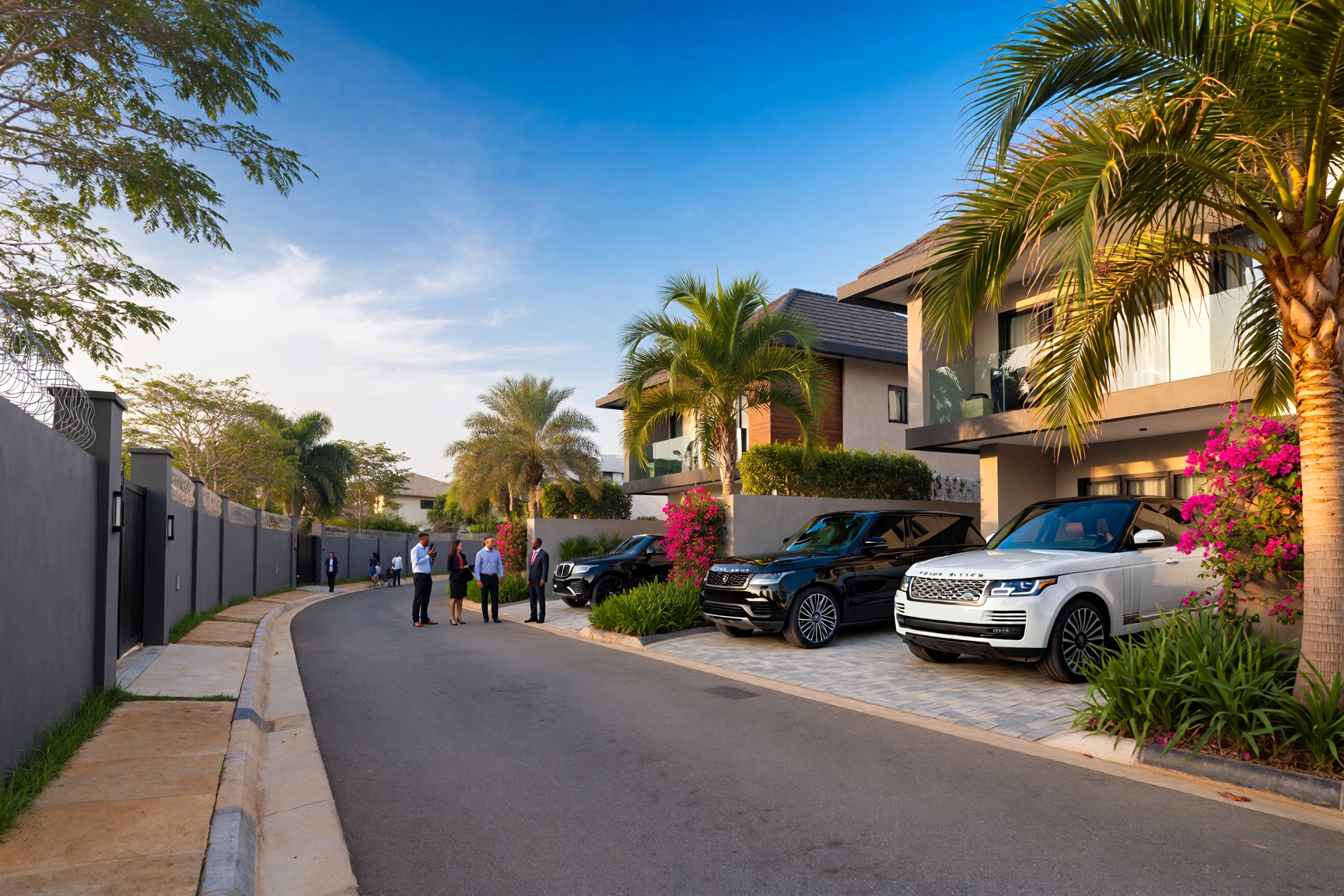
Lekki Phase 1 has emerged as the preferred choice for many Americans arriving in recent years. This planned development features newer infrastructure than VI or Ikoyi, controlled access estates with excellent security, proximity to the American International School, and a thriving expatriate community including significant American presence. Housing in Lekki Phase 1 ranges from ₦8 million to ₦25 million annually, offering better value than Ikoyi whilst maintaining similar security and amenity standards.
The Lekki-Epe Expressway provides access from Lekki to VI and the mainland, though this road suffers terrible traffic during commuting hours. Americans living in Lekki must factor in 60-90 minute commutes to workplaces in VI or mainland Lagos during peak times. Despite this drawback, Lekki's combination of security, community, and value makes it increasingly popular with American families.
Lekki Peninsula (Phases 2-5 and beyond) extends further east along the coast. These areas offer even newer development and lower costs (₦5 million to ₦15 million annually) but sacrifice convenience. Americans living this far out face challenging commutes and reduced access to the services and community presence that make Lagos life manageable. Only Americans with specific reasons (beachfront property, extreme budget constraints, preference for isolation) typically choose these outer areas.
Maryland and Ikeja on Lagos mainland host some Americans, particularly those on tighter budgets or whose work locations make mainland residence logical. Housing costs drop to ₦4 million to ₦10 million annually, but security concerns increase and expatriate community presence decreases. Americans living on the mainland typically work for NGOs, religious organisations, or educational institutions rather than corporations providing substantial housing allowances.
In Abuja, Maitama emerges as the premier expatriate neighbourhood. This diplomatic zone features excellent security, planned infrastructure, proximity to embassies and international organisations, quality housing stock, and a concentrated expatriate community. Housing in Maitama ranges from ₦12 million to ₦30 million annually. The neighbourhood's advantages include walkability (rare in Nigerian cities), reliable power and water infrastructure, and immediate access to expatriate-focused services.
Asokoro, adjacent to Maitama, offers similar benefits with somewhat more residential character and marginally lower costs (₦10 million to ₦25 million annually). Americans working in Abuja's diplomatic or development sectors typically choose between Maitama and Asokoro based on specific property availability and personal preferences rather than substantial differences between the areas.
Wuse II functions as Abuja's business district but includes residential towers and compounds housing expatriates. The area offers more affordable housing (₦8 million to ₦18 million annually) whilst maintaining decent security and amenities. Americans working in Abuja's commercial sector sometimes choose Wuse II for proximity to work, though it lacks the residential character of Maitama or Asokoro.
Gwarinpa and other Abuja outer districts offer significantly lower housing costs but reduced security, limited expatriate presence, and challenging access to international schools and expatriate-focused services. Few Americans choose these areas except when budget constraints make other options impossible.
Port Harcourt's American population concentrates in specific secured compounds rather than general neighbourhoods. Shell Residential Area (SRA), Mobil estates, and other company-operated compounds provide housing for Americans working in oil and gas. These compounds function as self-contained communities with schools, recreation facilities, healthcare, and comprehensive security. Americans working in Port Harcourt's energy sector typically have housing arranged through employment rather than independently selecting neighbourhoods.
When Americans do select independent housing in Port Harcourt, areas like Old GRA (Government Reserved Area) and New GRA offer relative security and quality housing, though these areas lack the controlled environment of company compounds. Housing costs in Port Harcourt's better areas range from ₦6 million to ₦15 million annually.
Housing Cost Comparison for American-Friendly Nigerian Locations
This table reflects current market rates as of early 2025 for housing suitable for American expatriates (typically 2-4 bedroom properties with reliable power backup, security features, and adequate maintenance). Rent is typically paid annually in advance, though some landlords now accept biannual payments. All figures in Naira millions should be multiplied by current exchange rates to determine dollar costs, which fluctuate based on Nigeria's foreign exchange dynamics.
These housing costs represent the single largest expense for Americans living independently in Nigeria. Corporate expatriate packages typically provide housing allowances covering most or all of these costs, whilst Americans working for NGOs, educational institutions, or small businesses often negotiate more modest housing arrangements or share accommodation to manage costs.
Where Most Foreign Nationals Choose to Settle in Nigeria
Understanding broader expatriate settlement patterns provides useful context for Americans deciding where to live. The general foreign population in Nigeria concentrates heavily in Lagos and Abuja, with smaller populations in Port Harcourt and emerging secondary cities.
Lagos hosts by far the largest foreign population in Nigeria. Beyond Americans, the city attracts substantial numbers of British, French, German, Indian, Chinese, Lebanese, and other expatriates working across various sectors. According to Guardian Nigeria's coverage of resident permits and expatriate employment, Nigeria hosts approximately 150,000 expatriates across all nationalities, with estimates suggesting 70,000-80,000 reside in Lagos.
This concentration creates a self-reinforcing dynamic. International schools establish campuses in Lagos to serve the foreign population. Healthcare facilities develop expatriate-focused services. Restaurants, grocery stores, and service providers cater to foreign tastes and expectations. Housing stock suitable for expatriates gets developed. The large foreign community presence makes Lagos life more manageable for new arrivals, as services and infrastructure evolve to meet expatriate needs.
The neighbourhoods Americans favour (Ikoyi, VI, Lekki) overlap substantially with where other Western expatriates choose to live. You'll find British families in the same estates, French executives in the same compounds, German engineers in the same towers. This creates an international rather than specifically American community, which some Americans appreciate whilst others prefer more concentrated American presence.
Abuja's foreign population skews more heavily toward diplomatic and development sectors. Embassy staff from dozens of countries, United Nations agency personnel, World Bank and IMF officials, and development organisation workers create a community where professional networking opportunities abound but commercial sector presence is limited. Americans in Abuja working in diplomatic or development roles typically find the expatriate community well-suited to their needs, whilst Americans in commercial sectors sometimes find Abuja's community too insular and government-focused.
Port Harcourt's expatriate community is highly specialised around oil and gas. The city attracts petroleum engineers, geologists, and energy sector professionals from Europe, North America, and Asia, but limited numbers of expatriates in other sectors. This creates a tight-knit community where everyone works in related industries, which some Americans find limiting but others appreciate for the shared professional focus.
One fascinating trend I've noticed through my research is how expatriate communities in Nigeria increasingly include Africans from other countries rather than only Westerners. Kenyans, South Africans, Ghanaians, and other African professionals work in Lagos and Abuja in growing numbers, creating a pan-African expatriate experience quite different from traditional Western-dominated expatriate communities in other global locations.
Americans deciding where to live would benefit from considering whether they want to integrate primarily with other Westerners, engage more broadly with pan-African expatriate communities, or attempt genuine integration into Nigerian social circles. Each choice leads toward different neighbourhood selections and community involvement patterns.
I spoke with Jennifer, an American teacher at an international school in Lagos. "I deliberately chose to live in a less expatriate-dominated area," she explained. "I wanted a more authentic Nigerian experience. But I admit, sometimes I miss having other Americans nearby who understand cultural references and can commiserate about navigating Nigerian systems. There's a balance to strike between integration and having your own community."
Evaluating Nigeria's Safest Regions for American Residents
Safety considerations dominate American residential decisions in Nigeria more than perhaps any other factor. Understanding Nigeria's security geography is essential for Americans making informed location choices.
Nigeria's security challenges cluster geographically in specific regions whilst other areas operate under substantially lower risk profiles. The northeast states of Borno, Adamawa, and Yobe face active insurgency from Boko Haram and Islamic State West Africa Province (ISWAP), with regular attacks, kidnappings, and territorial control disputes. Americans should not live in or travel to these states under current conditions. The security situation is genuinely dangerous, and no housing quality, job opportunity, or community presence justifies the risk.
The northwest states including Zamfara, Katsina, Sokoto, and parts of Kaduna experience severe banditry problems with armed groups conducting kidnappings, village raids, and highway attacks. Whilst some urban centres in these states maintain relative stability, Americans generally should avoid the entire region. The risk-reward calculation simply doesn't favour American residence in the northwest under current security conditions.
The north-central region presents mixed conditions. Abuja (Federal Capital Territory) maintains good security as discussed earlier. However, neighbouring states like Niger, Plateau, and Benue experience periodic ethnic conflicts, farmer-herder clashes, and bandit activity. Americans working in Abuja remain safe within the city but should avoid regional travel outside FCT boundaries without security assessments.
Southern Nigeria generally operates under more manageable security conditions for Americans. Lagos State, despite its challenges, benefits from concentrated security resources, economic importance driving stability, and infrastructure that supports secure residential compounds. The security situation in Lagos neighbourhoods suitable for American residence (Ikoyi, VI, Lekki) compares favourably to major cities in many developing countries.
Rivers State (Port Harcourt) has improved considerably from its troubled period but still experiences incidents of kidnapping, particularly targeting individuals perceived as wealthy foreigners. Americans in Port Harcourt must maintain vigilance and follow security protocols. Company-operated compounds provide essential security infrastructure that independent housing cannot match.
The southeastern states (Abia, Anambra, Enugu, Imo, Ebonyi) experience periodic agitation related to Indigenous People of Biafra (IPOB) activities, including occasional security force clashes and sit-at-home orders. However, these states don't face the sustained violence affecting northern regions. Americans working in southeastern cities like Enugu or Onitsha face manageable but elevated security considerations compared to Lagos or Abuja.
The southwestern states beyond Lagos (Ogun, Oyo, Osun, Ondo, Ekiti) generally maintain reasonable security, though Americans rarely choose to live in these states except for specific employment reasons. Cities like Ibadan or Abeokuta host small numbers of Americans working in education, healthcare, or development sectors, but limited expatriate infrastructure and community presence make these locations challenging for American families.
The Niger Delta region (Delta, Bayelsa, Akwa Ibom states) presents variable security. Oil-producing areas experience periodic pipeline vandalism, illegal refining activities, and community conflicts. Americans working in these areas typically do so through oil companies providing comprehensive security arrangements rather than living independently.
Understanding these geographic patterns allows Americans to make informed decisions about where they're willing to live. The practical reality is that American residential options in Nigeria concentrate in Lagos, Abuja, and to a lesser extent Port Harcourt not merely because of jobs or amenities but fundamentally because of security geography.
I remember speaking with David, an American security consultant who has worked across Nigeria. "People ask me, 'is Nigeria safe?' and I always respond, 'which Nigeria?'" he explained. "Lagos with proper precautions is quite different from Maiduguri. Abuja is quite different from rural Zamfara. Americans need to understand this geographic reality and make location decisions accordingly."
The Nigerian Immigration Service regulations require foreigners to notify authorities of extended travel outside their registered residence state. This seemingly bureaucratic requirement reflects security realities. Authorities want to know where foreign nationals are located, particularly if they plan to travel to higher-risk areas where emergency response capabilities may be limited.
Where is the Best Place for Americans to Live in Nigeria? A Direct Answer
Having examined security considerations, neighbourhoods, expatriate communities, and regional factors, let me address the primary question directly with specific recommendations based on different American profiles.
For American families with children, Lekki Phase 1 in Lagos emerges as the single best location in Nigeria. The area offers excellent security through gated estates, immediate access to the American International School Lagos and other quality international schools, a large American community providing social support and children's activities, relatively new infrastructure with fewer power and water disruptions than older Lagos neighbourhoods, and housing costs that, whilst substantial, deliver better value than Ikoyi or Victoria Island. American families in Lekki Phase 1 can build comfortable lives with manageable daily challenges, good schooling options for children, and community connections that ease the expatriate experience. The primary downside is commute times to workplaces in Victoria Island or mainland Lagos, but many American families decide this trade-off favours the superior residential environment Lekki provides.
For American professionals working in diplomatic, development, or international organisation roles, Maitama in Abuja represents the optimal choice. The neighbourhood's embassy concentration, excellent security, walkable infrastructure, quality housing, and professional networking opportunities create an environment where work and life integrate smoothly. Americans in Maitama benefit from Abuja's superior infrastructure planning compared to Lagos, somewhat lower living costs, and escape from Lagos's notorious traffic congestion. The trade-offs include Abuja's more limited restaurant and entertainment options compared to Lagos and somewhat smaller American community presence.
For single American professionals or couples without children prioritising convenience and social opportunities, Victoria Island in Lagos offers the most dynamic environment. VI's central location minimises commutes, its restaurant and nightlife scene provides extensive social options, and its young professional community (both Nigerian and expatriate) creates opportunities for genuine cross-cultural friendships rather than insular expatriate bubbles. Housing costs are high, but Americans in VI save time and transportation costs that those commuting from Lekki incur. The neighbourhood suits Americans who want to experience Lagos's energy directly rather than insulate themselves in quieter residential areas.
For Americans working in Nigeria's oil and gas sector, Port Harcourt's company-operated compounds provide the most practical solution. These secured facilities eliminate many security and infrastructure challenges that complicate independent living whilst placing residents immediately within professional communities sharing similar work. The controlled environment restricts certain freedoms but delivers reliable living conditions that independent housing in Port Harcourt cannot match. Americans on temporary assignments (1-2 years) typically find compound life acceptable, whilst those planning extended stays sometimes seek independent housing to gain more autonomy despite the trade-offs.
For Americans on tight budgets, particularly those working in education, NGOs, or religious organisations, mainland Lagos neighbourhoods like Maryland or Ikeja offer substantially lower costs whilst maintaining reasonable security and access to Lagos's opportunities. These areas require Americans to accept reduced expatriate community presence, somewhat elevated security vigilance, and fewer amenities specifically serving foreign residents. However, Americans willing to live more integrated into Nigerian society rather than in expatriate enclaves can build satisfying lives in these areas whilst saving millions of Naira annually on housing.
For Americans prioritising security above all other considerations, Ikoyi in Lagos or Maitama in Abuja deliver the most established, secure environments with decades of successful expatriate residence demonstrating their viability. These neighbourhoods command premium prices but provide peace of mind for Americans (or their employers) unwilling to accept any additional security risk beyond Nigeria's baseline challenges. Families with security concerns, single women prioritising safety, and risk-averse individuals should seriously consider whether the premium costs of Ikoyi or Maitama justify the enhanced security these areas provide.
The bottom line is that Lagos's Lekki Phase 1 probably represents the best overall compromise between security, cost, community, amenities, and family-friendliness for typical American expatriate families, whilst Abuja's Maitama serves Americans in diplomatic and development sectors better. Americans should align their specific priorities (family needs, budget, work location, desired lifestyle, security requirements) with neighbourhood characteristics to identify their personal optimal choice.
Seven Essential Steps for Americans Choosing Where to Live in Nigeria
Successfully selecting your Nigerian residential location requires systematic research and careful planning. Follow these seven steps to make an informed decision that matches your priorities and circumstances.
1. Clarify Your Core Priorities Before Beginning Your Search
Start by honestly assessing what matters most to you. Make a written list ranking your priorities. Is security your paramount concern, or are you willing to accept somewhat elevated risk for cost savings? Do you need to be within 30 minutes of your workplace, or can you tolerate longer commutes? Must you have an American community nearby, or do you prefer more integration into Nigerian society? Do you have children requiring access to specific international schools? Is your housing allowance generous enough to afford premium neighbourhoods, or must you find budget-friendly options? Write down your top five non-negotiable requirements and your top five strong preferences. This clarity prevents being swayed by property viewings or estate agent recommendations that don't actually fit your needs.
2. Research Specific Neighbourhoods Through Multiple Information Sources
Don't rely solely on what estate agents tell you. Join online forums where American expatriates in Nigeria share experiences (Facebook groups like "Expats in Lagos" or "Americans in Nigeria" provide candid neighbourhood assessments). Read comprehensive analyses of living in Nigeria as an American to understand cultural context. Request neighbourhood recommendations from your future colleagues who already live in Nigeria. Contact your company's HR department if you're relocating for employment, as they often maintain lists of employee residential locations and can connect you with current American staff for informal chats. Search Nigerian property websites to understand typical housing types, costs, and availability in different areas. Spend several hours researching each shortlisted neighbourhood before scheduling viewings. The more information you gather in advance, the better equipped you'll be to ask relevant questions and spot potential problems during property viewings.
3. Visit Nigeria on a House-Hunting Trip Before Committing to Any Residence
Never sign a lease or commit to housing without physically visiting Nigeria and viewing properties in person. If possible, schedule a dedicated house-hunting trip of 5-7 days focused solely on identifying housing. Work with 2-3 different estate agents to view multiple properties in your target neighbourhoods. Drive or be driven through neighbourhoods at different times of day to assess traffic patterns, observe local atmosphere, and get a genuine feel for areas beyond the curated experience property viewings provide. Visit the schools your children would attend if you have family. Locate grocery stores, healthcare facilities, and other services you'll rely on to confirm proximity claims estate agents make. Talk to current American residents you encounter during property viewings or neighbourhood tours to get unfiltered perspectives on living in different areas. The week you invest in a house-hunting trip prevents the costly mistake of committing to inappropriate housing sight-unseen.
4. Thoroughly Vet Security Arrangements for Any Property You Consider
Security is too critical to take estate agent assurances at face value. For compound or estate properties, ask for detailed information about security measures including number of guards present 24 hours, whether guards are armed and their training level, physical security features like perimeter walls and controlled access points, CCTV coverage, and emergency response protocols if incidents occur. Request contact information for other expatriate residents in the estate and speak with them about their security experiences. For standalone properties, assess what security infrastructure you'll need to install yourself and factor those costs (₦500,000 to ₦2 million for comprehensive systems) into your budget. Verify that the estate or property management company maintains security standards consistently rather than allowing them to deteriorate over time. Drive by properties at night to observe security presence and lighting. Americans have been targeted in Nigeria through security breaches at their residences, making this diligence essential rather than paranoid.
5. Negotiate Lease Terms That Protect Your Interests and Provide Flexibility
Nigerian property rental typically requires annual payment in advance, which represents a substantial cash outlay and creates risk if the property proves unsuitable. Negotiate for biannual payment if possible, arguing that this arrangement provides the landlord cash flow security whilst giving you an earlier exit option if the property has undisclosed problems. Include explicit clauses in your lease requiring the landlord to maintain power backup systems, water supply, air conditioning, and other essential infrastructure in working order. Specify response times for repairs (24 hours for emergency issues, 72 hours for non-emergency problems). Insist on a clause allowing early termination if you're relocated by your employer or if security conditions deteriorate significantly in the neighbourhood. Take dozens of photos and videos documenting the property's condition when you move in to protect yourself from false damage claims when departing. Have a Nigerian lawyer review your lease agreement before signing, as Nigerian rental law differs from American standards and lease terms that would be unenforceable in the US may be binding in Nigeria. The few hundred thousand Naira spent on legal review prevents expensive disputes later.
6. Establish Your Support Network and Essential Services Before Moving In
Don't wait until you're living in Nigeria to identify doctors, grocery stores, security companies, vehicle services, and other essential providers. Before moving in, research and contact expatriate-recommended healthcare providers in your area and confirm they accept your insurance. Identify 2-3 grocery stores or markets serving expatriate needs within reasonable distance. If you're bringing a vehicle or will purchase one in Nigeria, locate mechanics familiar with your vehicle type and reputable service centres. Connect with other Americans in your neighbourhood through social media or email introductions facilitated by colleagues. Join relevant social groups (American Women's Club of Lagos, American Business Council in Nigeria, church communities if applicable) that provide social connection and practical support. Set up your Nigerian bank account, get a local phone number, and handle administrative requirements before your household goods arrive. Having these foundations in place when you move in prevents the overwhelming feeling of trying to establish your entire life whilst also unpacking and starting a new job. Experienced expatriates consistently cite establishing support networks early as crucial to successful adaptation.
7. Plan for a Realistic Adjustment Period and Remain Flexible in Your Expectations
Even with perfect preparation, living in Nigeria will challenge you in unexpected ways. Plan for an adjustment period of 3-6 months where daily life feels difficult and you question your decision to come. This is normal, expected, and experienced by virtually all American expatriates in Nigeria. Don't make major housing or location decisions during this initial adjustment period when everything feels hard. Give yourself time to adapt to the infrastructure challenges, cultural differences, and lifestyle changes before concluding whether your chosen neighbourhood truly works for you. Maintain perspective that the first months are the hardest, and life becomes significantly more manageable once you establish routines, understand how to navigate Nigerian systems, and build community connections. Americans who successfully adapt to Nigerian life typically report that around the six-month mark, things "click" and they start genuinely enjoying aspects of Nigerian life rather than merely tolerating challenges. Join expatriate social groups specifically to connect with Americans who can normalise your experiences and share coping strategies. Consider your first year in Nigeria as a learning experience where some mistakes and frustrations are inevitable rather than signs you've made wrong choices. Flexibility, humility about the learning curve, and maintaining reasonable expectations make the critical difference between Americans who thrive in Nigeria and those who struggle through difficult assignments.
Comparing Nigeria's Regional Residential Options for American Expatriates
Americans considering Nigeria should understand how different regions compare across multiple factors relevant to successful expatriate residence. Regional variations in culture, climate, cost, and opportunity significantly impact daily living experiences.
Lagos presents the most cosmopolitan, diverse, and economically dynamic environment in Nigeria. The city functions as West Africa's commercial hub with an estimated population of 15-20 million people creating intense urban density. Americans in Lagos experience the full intensity of Nigerian life with all its energy, creativity, chaos, and challenges. The city's traffic congestion is legendary, with commutes that would take 15 minutes in uncongested conditions routinely requiring 90 minutes during rush hours. Infrastructure quality varies dramatically by neighbourhood, with areas like Lekki boasting relatively modern roads, drainage, and utilities whilst older neighbourhoods struggle with deteriorating systems.
Lagos's climate is hot and humid year-round, with temperatures of 25-33°C and high humidity levels that Americans from temperate climates find challenging. The coastal location provides some moderating influence but also means rainy season (April-October) brings intense rainfall that floods low-lying areas and disrupts travel. Americans with respiratory issues sometimes struggle with Lagos's air quality, which suffers from vehicle emissions and industrial pollution.
The city's advantages for Americans include the largest expatriate community in Nigeria providing comprehensive support networks, extensive restaurant and entertainment options serving international tastes, multiple international schools with American curriculum options, healthcare facilities with expatriate-focused services, and direct flights to the United States and Europe through Murtala Muhammed International Airport. Professional opportunities concentrate in Lagos more than anywhere else in Nigeria, particularly in finance, telecommunications, consumer goods, and professional services sectors.
Abuja offers a planned city environment with organized infrastructure, lower density, and calmer pace than Lagos. The city's layout reflects its purpose-built capital status with broad avenues, designated zones for different activities, and generally better road conditions than Lagos. Traffic exists but operates at far more manageable levels than Lagos's gridlock. The city's central Nigeria location means slightly cooler temperatures (21-31°C) and lower humidity than coastal areas, though the Harmattan season (November-March) brings dusty, dry air from the Sahara that affects air quality.
Abuja's advantages include excellent security in diplomatic zones, proximity to federal government and international development organisations, quality international schools, reliable power and water infrastructure in better neighbourhoods, and escape from Lagos's overwhelming intensity. The city's disadvantages include more limited restaurant and entertainment options compared to Lagos, somewhat insular expatriate community focused on diplomatic and development sectors, higher costs relative to the city's amenities, and feeling artificial or sterile compared to Lagos's organic urban energy.
Americans working in diplomatic, development, or government-related fields typically find Abuja superior to Lagos, whilst those in commercial sectors often prefer Lagos's dynamism and opportunities despite its challenges. Families sometimes choose Abuja for its slower pace and superior infrastructure, whilst singles often prefer Lagos's social scene and energy.
Port Harcourt functions primarily as an oil and gas city with expatriate presence overwhelmingly concentrated in energy sector roles. The city lacks the diversified economy of Lagos or the diplomatic concentration of Abuja, creating a specialised environment serving one primary industry. Infrastructure quality is moderate, better than many Nigerian secondary cities but inferior to Lagos's best neighbourhoods or Abuja's planned zones.
Port Harcourt's climate is extremely hot and humid, similar to Lagos but without the moderating influence of Lagos's coastal breezes. Americans from temperate climates often find Port Harcourt's heat oppressive. Security has improved but remains a concern requiring vigilant precautions and justified reliance on secured compounds. The city's advantages for Americans in oil and gas include company-provided housing eliminating housing search challenges, immediate integration into professional communities sharing similar work, relatively high compensation reflecting the assignment's challenges, and direct connection to Nigeria's energy industry providing valuable career experience.
Secondary Nigerian cities (Ibadan, Kano, Kaduna, Enugu, Benin City) rarely host American residents except those in specialised roles with NGOs, educational institutions, religious organisations, or small businesses. These cities lack the expatriate infrastructure, international schools, healthcare facilities, security arrangements, and community support that make Lagos, Abuja, or Port Harcourt viable for Americans. Some Americans successfully live in secondary cities but typically accept compromises on amenities, security, and community that most Americans find difficult.
Understanding these regional differences helps Americans align their location decision with their priorities, family situation, risk tolerance, and professional requirements rather than defaulting to assumptions about where they "should" live.
Understanding Nigerian State-by-State Living Conditions and Safety Ratings
Americans need to understand that Nigeria operates as a federation of 36 states plus the Federal Capital Territory, and living conditions vary enormously between states. Some states offer relatively comfortable environments for foreign residents, whilst others present challenges that make American residence inadvisable.
Lagos State tops the list for American residential suitability despite its considerable challenges. The state benefits from economic dynamism attracting investment and talent, concentrated security resources reflecting its commercial importance, extensive expatriate infrastructure developed over decades, Nigeria's most cosmopolitan population with exposure to foreigners, and direct international connectivity through West Africa's busiest airport. Security ratings for Lagos's expatriate neighbourhoods classify as "medium risk" or "elevated risk" rather than the "high risk" or "extreme risk" affecting certain northern states. Americans can live safely in Lagos with appropriate precautions.
Federal Capital Territory (Abuja) ranks second for American suitability. As Nigeria's capital, Abuja concentrates federal government resources, diplomatic presence driving security focus, planned infrastructure superior to organically developed cities, and relatively homogeneous middle-class and elite population. Security ratings for Abuja's diplomatic zones rate as "medium risk" with security conditions comparable to other African capitals. Americans working in government-related sectors find Abuja ideally suited to their needs.
Rivers State (Port Harcourt) serves Americans in specific petroleum industry roles adequately but presents challenges for those outside this sector. The state's economy centres heavily on oil and gas, creating specialised rather than diversified expatriate infrastructure. Security has improved but incidents of kidnapping targeting perceived wealthy individuals occur periodically. Security ratings classify Rivers State as "elevated risk" requiring vigilant precautions. Americans should rely on company-secured compounds rather than independent housing where possible.
Ogun State, adjacent to Lagos, hosts some American manufacturing and industrial operations. Cities like Ota and Sagamu feature industrial estates where Americans work in supervisory roles. However, limited residential expatriate infrastructure means most Americans working in Ogun State actually live in Lagos and commute. Security conditions in Ogun generally rate as "medium risk" similar to Lagos.
Akwa Ibom State attracts some Americans working in the petroleum sector, though on a much smaller scale than Rivers State. The state capital Uyo has developed some expatriate-focused infrastructure serving oil industry personnel. Security conditions rate as "elevated risk" similar to Rivers State.
The southeastern states (Abia, Anambra, Enugu, Imo, Ebonyi) host small numbers of Americans in education, healthcare, or development roles. Cities like Enugu or Onitsha have small expatriate communities but limited specialised infrastructure serving foreign residents. Security conditions vary but generally rate as "elevated risk" due to periodic IPOB-related tensions. Americans working in these states should carefully assess security before residence.
The southwestern states (Oyo, Osun, Ondo, Ekiti) rarely host American residents except those in specialised educational or development roles. Ibadan in Oyo State hosts some Americans working at the University of Ibadan or with international development organisations. Security conditions in southwestern states generally rate as "medium risk."
The south-south states beyond Rivers and Akwa Ibom (Delta, Bayelsa, Cross River, Edo) present variable conditions. Delta and Bayelsa states face security challenges in oil-producing areas with periodic militant activity, kidnapping risks, and illegal refining operations. Cross River State capital Calabar has developed some tourism infrastructure but hosts few long-term American residents. Edo State capital Benin City hosts occasional American development workers but limited expatriate infrastructure. Security ratings for these states range from "elevated risk" to "high risk" depending on specific locations.
The north-central states present mixed conditions. FCT Abuja operates safely as discussed. However, neighbouring Niger, Nasarawa, Plateau, Benue, Kogi, and Kwara states experience varying security challenges. Security ratings range from "elevated risk" to "high risk" with specific locations experiencing banditry, ethnic conflicts, or farmer-herder clashes. Americans should not reside in these states outside Abuja without thorough security assessments.
The northwestern states (Sokoto, Kebbi, Zamfara, Katsina, Kano, Jigawa, Kaduna) face severe security challenges. Zamfara and Katsina states experience extreme banditry with armed groups controlling territory and conducting regular kidnappings. Security ratings classify these states as "high risk" or "extreme risk." Kano, Nigeria's second-largest city, has some expatriate presence but security concerns and limited Western expatriate infrastructure make it unsuitable for most Americans. Kaduna hosts some development organisation staff but security incidents including kidnapping of foreign nationals have occurred. Americans should not reside in northwestern states except under extraordinary circumstances with comprehensive security arrangements.
The northeastern states (Borno, Adamawa, Yobe, Bauchi, Gombe, Taraba) face active insurgency in some areas and elevated security risks throughout. Borno and Yobe states remain conflict zones where Boko Haram and ISWAP operate with territorial control in some areas. Security ratings classify these states as "extreme risk." Maiduguri, Borno's capital, hosts some humanitarian workers operating under strict security protocols, but American residence there requires exceptional justification. Bauchi, Gombe, and Taraba face elevated but not extreme security challenges. Americans should not reside in northeastern states except under exceptional circumstances with comprehensive security infrastructure provided by established international organisations.
This state-by-state analysis demonstrates that American residential options in Nigeria concentrate in Lagos State, FCT Abuja, and selectively Rivers State not merely because of jobs or lifestyle preferences but fundamentally because of geography and security realities that make other Nigerian locations unsuitable or inadvisable for American residence under current conditions.
Conclusion: Making Your Best Location Decision for Living as an American in Nigeria
Deciding where to live in Nigeria as an American requires balancing security, cost, community, convenience, and personal priorities within the constraints of Nigeria's geographic and infrastructure realities. Lagos's Lekki Phase 1 emerges as the single best option for most American families, combining excellent security through gated estates, strong American community presence, access to quality international schools, relatively modern infrastructure, and costs that deliver value compared to older premium neighbourhoods. Abuja's Maitama serves Americans in diplomatic and development roles superbly with its embassy concentration, walkable infrastructure, and reliable services. Port Harcourt's company compounds meet the needs of Americans in oil and gas when security and infrastructure reliability are prioritised. Victoria Island suits single professionals or couples seeking Lagos's energy and convenience despite higher costs. Americans on tighter budgets can find workable solutions in mainland Lagos neighbourhoods or Abuja's Wuse II with trade-offs in community and amenities.
The critical principle is to align your specific circumstances (family status, work location, budget, risk tolerance, lifestyle preferences) with neighbourhood characteristics rather than defaulting to generic advice about "where expatriates live." An American petroleum engineer on a generous corporate package has different optimal choices than an American teacher working for an international school. A single American professional seeking social opportunities makes different calculations than an American family with three school-age children. Americans willing to live more integrated into Nigerian society face different options than those requiring substantial expatriate community support.
Start your decision process by clarifying priorities, conduct thorough neighbourhood research through multiple sources, visit Nigeria for dedicated house-hunting before committing to housing, vet security arrangements carefully, negotiate lease terms protecting your interests, establish support networks before moving in, and maintain realistic expectations about the adjustment period. Following this systematic approach leads most Americans to residential choices they find workable, safe, and even enjoyable despite Nigeria's considerable challenges.
The approximately 10,000 to 25,000 Americans currently living successfully in Nigeria demonstrate that with proper location selection, security precautions, and community support, Americans can build satisfying lives in Africa's most populous nation. Nigeria offers Americans extraordinary opportunities for professional growth, cultural experiences, and personal development that few other global locations provide. Choosing where you'll live represents the foundation supporting everything else about your Nigerian experience.
Key Takeaways for Americans Choosing Where to Live in Nigeria
* Lekki Phase 1 in Lagos offers the optimal balance of security, community, schools, and value for most American expatriate families, whilst Abuja's Maitama serves diplomatic and development sector professionals best with superior infrastructure and professional networking opportunities.
* Security considerations must drive location decisions more than convenience or cost, as Nigeria's regional security variations mean that certain states remain entirely unsuitable for American residence whilst Lagos, Abuja, and selectively Port Harcourt provide manageable risk environments when proper precautions are maintained.
* Success requires systematic preparation including dedicated house-hunting trips, thorough neighbourhood vetting, careful lease negotiation, early establishment of support networks, and maintaining realistic expectations about the 3-6 month adjustment period that all Americans experience when adapting to Nigerian life regardless of where they choose to live.
For additional perspectives on building a successful life in Nigeria, you might find it useful to explore my previous articles examining Nigerian marriage customs and traditions and what Nigerian traditions encompass across the country's diverse cultures. Understanding Nigerian cultural practices provides valuable context for Americans navigating not just where to live, but how to build genuine connections and appreciation for the remarkable society you'll be joining.
Frequently Asked Questions: Americans Living in Nigeria
Where is the best place for Americans to live in Lagos specifically?
Lekki Phase 1 represents the best overall Lagos location for most American families and professionals, offering gated estates with excellent security, proximity to the American International School, strong American community presence, newer infrastructure with fewer power and water problems, and annual housing costs of ₦8-25 million that deliver better value than Ikoyi or Victoria Island whilst maintaining comparable amenities and safety standards. Americans without school-age children or those prioritising shorter commutes to Victoria Island workplaces might choose VI itself despite higher costs (₦12-35 million annually), whilst families prioritising prestige and established infrastructure sometimes select Ikoyi (₦15-45 million annually) despite its premium pricing.
Is Abuja safer than Lagos for Americans?
Yes, Abuja generally provides superior security for Americans compared to Lagos due to concentrated security resources protecting the capital, planned infrastructure reducing vulnerability points, diplomatic zone protections in neighbourhoods like Maitama and Asokoro, lower crime rates than Lagos's dense urban environment, and escape from Lagos's traffic congestion that creates exposure during long commutes. However, both cities allow Americans to live safely with appropriate precautions, and Lagos offers advantages in expatriate community size, international school options, healthcare facilities, restaurant and entertainment variety, and professional opportunities that lead many Americans to choose Lagos despite Abuja's security edge.
Can Americans live outside Lagos or Abuja in Nigeria?
Americans can technically live anywhere in Nigeria where they can secure appropriate housing and meet immigration requirements, but practical considerations severely limit viable options beyond Lagos, Abuja, and selectively Port Harcourt's secured compounds. Secondary cities lack international schools serving American curricula, expatriate-focused healthcare facilities, security infrastructure protecting foreign residents, expatriate community support networks, and amenities serving Western preferences that make Lagos and Abuja manageable for American families. Individual Americans working in specialised roles (development workers in Enugu, missionaries in Kano, educators in Ibadan) do live successfully in secondary cities by accepting compromises on schools, security, community, and conveniences that most American families find unacceptable.
What are typical housing costs for Americans in Nigeria?
Americans in Lagos pay ₦8-45 million annually depending on neighbourhood choice, with Lekki Phase 1 averaging ₦8-25 million, Victoria Island ₦12-35 million, and Ikoyi ₦15-45 million for housing suitable for expatriate families (2-4 bedrooms with reliable power backup, security, and adequate maintenance). Abuja costs range ₦8-30 million annually with Maitama at ₦12-30 million, Asokoro ₦10-25 million, and Wuse II ₦8-18 million. Port Harcourt independent housing costs ₦6-15 million annually though most Americans receive company-provided accommodation. Rent is typically paid annually in advance, creating substantial upfront costs, though some landlords now accept biannual payments after negotiation.
Where do most American expatriates actually choose to live?
Approximately 60-65% of the estimated 10,000-25,000 Americans in Nigeria live in Lagos State with concentrations in Lekki Phase 1, Victoria Island, and Ikoyi neighbourhoods, whilst 25-30% live in Abuja's diplomatic zones of Maitama and Asokoro, and 5-10% work in Port Harcourt's oil and gas sector living primarily in secured company compounds. The remaining Americans work in secondary cities, missionary stations, or specialised development roles across Nigeria. This distribution reflects where jobs, security, international schools, healthcare, and expatriate community support intersect to create viable living conditions for Americans rather than indicating those locations are necessarily pleasant or easy but rather that they're manageable compared to alternative Nigerian locations.
Is Port Harcourt a good place for Americans to live?
Port Harcourt serves Americans working in Nigeria's petroleum sector adequately when housed in company-operated secured compounds that provide controlled environments with comprehensive security, on-site amenities, and expatriate community connections, but the city presents significant challenges for Americans seeking independent housing or working outside oil and gas. Security remains elevated concern with periodic kidnapping incidents targeting perceived wealthy individuals, infrastructure quality is inconsistent with frequent power outages and water supply problems, international school options are limited compared to Lagos or Abuja, healthcare facilities serving expatriates are adequate but not comprehensive, and the expatriate community skews heavily toward petroleum professionals creating limited diversity in social connections. Americans on temporary oil and gas assignments (1-2 years) typically find Port Harcourt workable, whilst those planning extended stays or families requiring quality schools often struggle.
What security precautions should Americans take in Nigeria?
Americans in Nigeria should live in gated estates or compounds with 24-hour security, avoid displaying wealth through jewelry, expensive watches, or conspicuous consumption, vary travel routes and schedules to prevent predictable patterns, use trusted drivers rather than self-driving particularly at night, avoid traveling outside secure neighbourhoods after dark, stay informed about security alerts through embassy notifications and expatriate community networks, maintain low profiles and avoid drawing attention to foreign nationality, keep emergency contact numbers including embassy, security company, and trusted Nigerian contacts readily available, travel in groups when possible rather than alone, and avoid all travel to northern Nigeria states classified as high-risk or extreme-risk by US State Department advisories. Most importantly, Americans should respect that Nigeria's security situation requires sustained vigilance rather than occasional precautions.
Can Americans buy property in Nigeria?
Yes, Americans can legally purchase property in Nigeria, with the process requiring engaging a reputable Nigerian lawyer to conduct title verification confirming the seller's legitimate ownership, obtaining Governor's Consent for the property transfer as required by Nigerian Land Use Act, registering the property with the state land registry, and paying associated stamp duties and registration fees typically totaling 8-12% of the purchase price. However, most American expatriates on temporary assignments (2-5 years) choose to rent rather than buy because of Nigeria's complex property rights system, difficulty reselling foreign-owned property, substantial upfront costs including legal fees and taxes, challenges accessing mortgage financing as non-Nigerians, and uncertainty about long-term residence duration making rental's flexibility more attractive. Americans planning permanent or very long-term Nigerian residence sometimes purchase property after thoroughly understanding the legal complexities involved.
What international schools are available for American children in Nigeria?
Lagos hosts the American International School Lagos (AISL) in Lekki offering American curriculum from Pre-K through Grade 12, Lagos Preparatory School providing British-American curriculum, and several other international schools including British International School Lagos, Grange School Ikeja, and Corona Schools serving expatriate families. Abuja offers American International School Abuja in Maitama, British Nigerian Academy, and several other international schools. Annual fees for premium international schools range ₦8-15 million per child, representing substantial expense that most corporate expatriate packages include but that Americans on modest salaries struggle to afford. Port Harcourt has limited international school options with most expatriate children attending schools operated within company compounds or traveling to Lagos for boarding school education.
How difficult is the adjustment to living in Nigeria for Americans?
Most Americans experience significant culture shock and adjustment challenges during their first 3-6 months in Nigeria, struggling with infrastructure frustrations including frequent power outages requiring generator dependency, unreliable water supply, terrible traffic congestion, different communication styles and business practices, more hierarchical social structures than Americans expect, intense heat and humidity, confronting extreme poverty and inequality, navigating corruption in daily transactions, and feeling isolated from American cultural references, news, and social connections. However, Americans who maintain realistic expectations, build support networks through expatriate communities, hire reliable household staff to manage daily challenges, develop routines that work within Nigerian realities, and approach Nigeria with curiosity rather than judgment typically find that around six months, life becomes significantly more manageable and even enjoyable. The key is treating the first year as learning experience rather than expecting immediate comfort.
What is the cost of living for Americans in Nigeria?
Americans in Nigeria typically spend ₦2-8 million monthly (approximately $1,300-5,200 at ₦1,550/$1 exchange rate) depending on lifestyle choices, family size, and housing arrangements, with major expenses including annual housing costs of ₦8-45 million depending on neighbourhood, international school fees of ₦8-15 million annually per child, generator fuel costs of ₦200,000-600,000 monthly for reliable electricity, household staff salaries of ₦200,000-500,000 monthly for cook, cleaner, driver, and nanny, imported groceries and dining at expatriate-focused restaurants adding ₦400,000-800,000 monthly, vehicle purchase or maintenance costs, healthcare through private hospitals and international health insurance, and entertainment and travel. Food and transportation costs less in Nigeria than the US when buying local products and using Nigerian services, but Americans typically maintain partially Western lifestyles requiring expensive imported goods, private security, backup power systems, and other infrastructure that dramatically increases living costs beyond what Nigerians themselves spend.
Are there American communities and social groups in Nigeria?
Lagos hosts the largest American community in Nigeria with active American Women's Club of Lagos, American Business Council providing networking for American professionals, various church communities including Redeemed Christian Church's international services and Catholic churches serving expatriate congregations, sports leagues and social clubs through international schools, and informal neighbourhood groups where Americans connect through children's playdates, dinner parties, and shared activities. Abuja has American Women's Club of Abuja, American Chamber of Commerce, embassy-connected social events for Americans in diplomatic community, and church groups serving expatriate members. Port Harcourt's American community centres primarily around oil company compounds with limited broader American social infrastructure. Americans in secondary Nigerian cities typically lack dedicated American communities but connect with broader expatriate or international development worker networks.