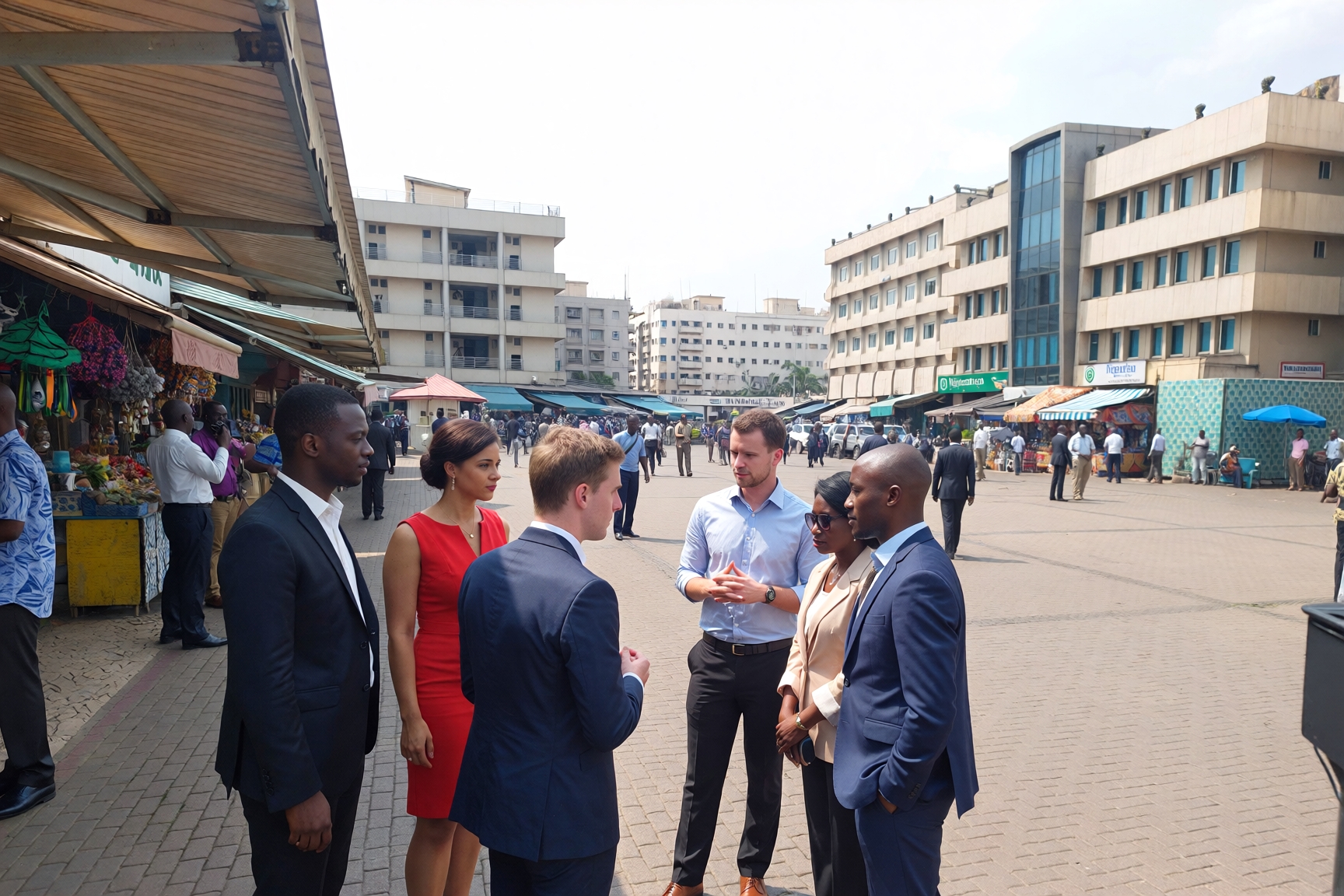
Welcome, dear readers! After months of meticulously researching the American expatriate community in Nigeria, conducting interviews with American residents in Lagos and Abuja, and spending years documenting migration patterns between our two nations, I'm thrilled to share this comprehensive exploration with you. The question of how many Americans are in Nigeria represents more than mere statistics. It's about understanding a unique community that bridges continents, navigates complex cultural landscapes, and contributes to Nigeria's development whilst managing the challenges of expatriate life in Africa's most populous nation.
Current estimates suggest approximately 10,000 to 25,000 American citizens reside in Nigeria at any given time, though these figures fluctuate significantly based on economic conditions, security concerns, and employment opportunities in sectors like oil, telecommunications, and international development.
I remember meeting Jennifer, an American petroleum engineer, at a networking event in Victoria Island back in 2021. She'd been living in Lagos for eight years, far longer than most of her expatriate colleagues. "Nigeria gets under your skin," she told me whilst we waited for generators to restore power during one of those infamous NEPA blackouts. "It frustrates you daily, yet I can't imagine leaving." That paradox captures something essential about the American experience in Nigeria.
The relationship between Nigeria and America has always been asymmetrical, rather like a lopsided friendship where one person visits far more often than the other. Whilst over 600,000 Nigerian-born individuals call America home according to US Census data, the reverse flow remains comparatively modest. Yet those Americans who do choose Nigeria often find themselves at the intersection of international business, diplomatic relations, and development work that shapes our nation's trajectory.
Which U.S. City Sends the Most Americans to Nigeria?
Houston, Texas dominates American expatriate flows to Nigeria in ways that would surprise most people. The energy corridor connecting Houston's petroleum industry to Nigeria's oil sector has created what migration researchers call a "specialized migration pathway."
I've watched this Houston-Nigeria connection develop over years of covering energy sector movements. The correlation makes perfect sense when you consider that Houston hosts the headquarters or major offices of virtually every international oil company operating in Nigeria. Shell, Chevron, ExxonMobil, and numerous service companies like Halliburton and Baker Hughes all maintain substantial Houston operations whilst simultaneously running extensive Nigerian projects.
When these companies need specialized petroleum engineers, geologists, or project managers for Nigerian operations, they frequently recruit from their Houston talent pools. The result? A steady stream of Texans arriving at Murtala Muhammed International Airport with contracts ranging from six months to several years.
One fascinating aspect is how this creates cultural bridges. Nigerian petroleum professionals who've worked in Houston often return home, creating networks that ease American colleagues' transitions to Nigeria. I've met American engineers who joke that their Nigerian teammates know Houston barbecue joints better than some native Texans!
Washington DC and the surrounding Maryland-Virginia area contribute the second-largest contingent of Americans to Nigeria. This makes sense given that diplomatic personnel, USAID workers, development contractors, and international organization staff typically originate from or train in the DC metropolitan area before overseas assignments.
The US Embassy in Abuja processes work permits for hundreds of American government employees, contractors, and their dependents annually. These Americans occupy a different niche than oil sector workers. They're diplomats, development professionals, security specialists, and the various support personnel required to maintain America's substantial diplomatic presence in Nigeria.
New York follows as the third major source city, though Americans arriving from New York tend toward different sectors. Investment professionals, technology entrepreneurs, financial services experts, and media professionals form the core of New York's expatriate contribution to Nigeria. I've noticed this group particularly concentrates in Lagos, drawn to Nigeria's emerging fintech scene and the business opportunities that Africa's largest economy presents.
The diversity of American source cities has expanded recently. I've met Americans from Atlanta working in telecommunications, Californians involved in renewable energy projects, and even a handful from Minneapolis working with agricultural development programmes in northern states. The American presence in Nigeria is becoming less dominated by oil sector professionals and more diverse in both origin and occupation.
Understanding the Current American Population in Nigeria
Breaking down exactly how many Americans are in Nigeria requires understanding why these figures remain somewhat imprecise. Unlike Nigeria's meticulous tracking of its diaspora population abroad, Nigeria doesn't maintain a centralised database specifically for American residents.
We piece together estimates from several sources. The US Embassy's consular registration system captures Americans who've formally registered their presence, though many don't register unless they need consular services. Nigerian Immigration Service work permit applications provide another data point, tracking Americans who've entered on employment visas or temporary work permits.
Corporate human resources records from multinational companies operating in Nigeria offer additional insights, particularly for oil, telecommunications, and development sectors where American expertise concentrates. When you triangulate these sources, the 10,000 to 25,000 estimate emerges as most credible.
The American population ebbs and flows with Nigeria's economic fortunes. During the peak of Nigeria's oil boom in the late 2000s, American numbers swelled considerably. I remember that period when certain Lagos restaurants felt rather like Houston suburbs, packed with American accents discussing drilling projects and production targets.
The 2015 economic downturn and subsequent security concerns saw many Americans relocate. Companies reduced expatriate positions, cancelled expansion projects, and where possible replaced American staff with Nigerian professionals. This wasn't just cost-cutting (though expatriate compensation packages can exceed ₦30 million annually). Security considerations genuinely influenced corporate decisions about maintaining American staff in Nigeria.
Numbers have been gradually recovering as Nigeria's economy stabilises and attracts foreign investment. The Nigerian Immigration Service's residence permit system now processes applications more efficiently, making legal status management easier for long-term American residents.
Geographic Distribution of Americans Across Nigerian Cities
This table reveals stark geographic concentration. Lagos and Abuja account for roughly 75-80 percent of Americans in Nigeria, with Port Harcourt capturing most of the remainder due to its position as Nigeria's oil industry hub. The living costs reflect this distribution, with Lagos commanding premium prices for expatriate-standard accommodation in secure neighbourhoods like Victoria Island, Ikoyi, and Lekki Phase 1.
The sectors employing Americans have diversified beyond traditional oil and gas dominance. Whilst petroleum still accounts for approximately 40 percent of American employment in Nigeria, technology, international development, education, and financial services now represent significant portions of the American workforce.
Comparing Nigeria and USA Population Dynamics
Nigeria and the United States represent two demographic giants moving in opposite directions. Nigeria's population currently stands at approximately 223 million (according to recent estimates), whilst the United States hosts roughly 340 million people. The USA maintains its position as the third most populous country globally, behind China and India.
But here's where it gets fascinating. Nigeria's population growth rate dramatically exceeds America's. The National Population Commission projects Nigeria could reach 400 million by 2050, potentially overtaking the United States to become the world's third most populous nation by 2100 with projected populations exceeding 730 million.
This demographic trajectory carries profound implications for US-Nigeria relations. A Nigeria with 400 million people represents an enormous market for American goods, services, and technology. It also means increased migration pressure, as a percentage of such a vast population seeking opportunities abroad translates to millions of potential emigrants.
I remember discussing these projections with an American demographer working with a Lagos-based NGO. She pointed out something I'd not considered. "When Nigeria has 400 million people," she said, "the diaspora dynamics completely shift. You'll have millions of Nigerian-Americans with deep cultural and family ties to a country that's potentially more populous than America itself. That changes everything about bilateral relationships."
The age structure differences between our nations matter too. Nigeria's median age hovers around 18 years, whilst America's median age exceeds 38 years. Nigeria is a young nation with all the dynamism and challenges that implies. America is ageing, facing workforce sustainability questions that Nigerian human capital could partially address.
Population density tells another story. Nigeria packs 223 million people into 923,768 square kilometres, whilst America spreads 340 million across 9.8 million square kilometres. We're dealing with vastly different experiences of crowding, infrastructure strain, and resource allocation.
The migration flows reflect these disparities. Economic opportunity, educational access, and quality of life considerations explain why the United Kingdom hosts the largest Nigerian diaspora globally whilst only 10,000-25,000 Americans reside in Nigeria. The asymmetry isn't mysterious when you compare median incomes, infrastructure quality, or educational opportunities.
Yet Americans choosing Nigeria often find unexpected rewards. Lower cost of living (if you accept Nigerian standards rather than insisting on Western amenities), business opportunities in underserved markets, and the adventure of living in a dynamic, chaotic, endlessly fascinating society all appeal to certain personality types.
Can an American Successfully Live in Nigeria?
Absolutely yes, though success requires realistic expectations and thorough preparation. Thousands of Americans live productive, fulfilling lives in Nigeria, but they've learned to navigate challenges that never crossed their minds back home.
Let me be direct about something. Living in Nigeria as an American is nothing like the Africa portrayed in Western media. Lagos, where most Americans reside, is a chaotic megacity of 25 million people with traffic that makes Los Angeles look efficient and a hustle culture that would impress New Yorkers. Your daily experience depends enormously on your economic position.
Americans working for major multinationals typically live in secured compounds with backup generators, water treatment systems, and 24-hour security. Monthly accommodation costs in these settings range from ₦1,200,000 to ₦15,000,000 depending on neighbourhood and luxury level. Victoria Island, Ikoyi, and Banana Island represent the premium end where some Americans spend more on housing than they would in Manhattan.
I've watched Americans adapt differently based on their approach. Those who try to recreate American suburban life in Lagos generally struggle and remain frustrated. Those who accept Nigeria on its own terms, embracing the chaos whilst taking sensible precautions, tend to thrive.
Here's a practical 7-step guide I've developed from observing successful American transitions to Nigerian life:
Seven Essential Steps for Americans Planning to Live in Nigeria
1. Secure Proper Employment and Visa Documentation Before Arrival
Never, and I mean never, arrive in Nigeria on a tourist visa hoping to "figure things out." The Nigerian Immigration Service takes employment violations seriously, and working on incorrect visa status creates problems that can haunt you for years.
Your employer should initiate the work permit process well before your arrival. This typically involves securing an expatriate quota approval from the Federal Ministry of Interior, submitting extensive documentation about your qualifications and the position's requirements, and processing fees that can reach ₦500,000 depending on permit type and duration.
The Subject to Regularisation (STR) visa allows you to enter Nigeria whilst your residence permit processes. Once in-country, you'll need to complete CERPAC (Combined Expatriate Residence Permit and Alien Card) registration, which involves biometric data collection, medical examinations, and additional fees around ₦730,000 (approximately $2,000).
Processing typically takes 6-12 weeks, during which your STR visa keeps you legal. Budget time accordingly and don't make major commitments assuming faster processing.
2. Arrange Housing in Secure, Expatriate-Friendly Neighbourhoods
Housing decisions dramatically impact your Nigerian experience. Americans typically gravitate toward specific areas based on their city of residence.
In Lagos, Victoria Island, Ikoyi, Lekki Phase 1, and Banana Island offer the infrastructure and security most Americans require. Monthly rents range from ₦800,000 for modest apartments to ₦15 million for luxury compounds. Most landlords require two years' rent upfront, meaning you might need to wire ₦20-40 million before moving in.
Abuja's expatriate areas include Maitama, Asokoro, Wuse 2, and Garki. These neighbourhoods offer slightly lower costs than Lagos whilst providing similar security and infrastructure. Port Harcourt Americans concentrate in GRA (Government Reserved Area) where oil company housing dominates.
Verify that properties include backup generators (power cuts happen daily), water treatment or storage systems (municipal water is unreliable), and perimeter security with guards. These aren't luxuries but necessities for comfortable living.
3. Establish Reliable Transportation and Driver Arrangements
Nigerian traffic is genuinely dangerous. Lagos ranks among the world's most congested cities, and traffic accidents occur with disturbing frequency. Most Americans hire dedicated drivers rather than navigating themselves.
Driver salaries range from ₦80,000 to ₦150,000 monthly depending on experience and your negotiation. This might seem expensive until you experience your first Lagos rush hour, when a 5-kilometre journey can consume three hours.
Your driver becomes more than transportation. They navigate bureaucracy you don't understand, translate when needed, and warn you about neighbourhoods best avoided. One American friend told me her driver saved her life by recognising an armed robbery setup and immediately diverting their route.
Maintain comprehensive vehicle insurance (₦200,000-₦500,000 annually) and ensure your driver holds proper licensing. Police checkpoints happen frequently, and documentation issues create problems you don't need.
4. Build Financial Systems Connecting US and Nigerian Banking
Managing finances across two countries requires planning. You'll need Nigerian bank accounts for local transactions whilst maintaining American accounts for international transfers, investments, and eventual repatriation of funds.
Opening Nigerian bank accounts requires your passport, residence permit, proof of address, and typically a letter from your employer. Major international banks like Citibank, Standard Chartered, and Stanbic IBTC offer services tailored to expatriates, though local banks like GTBank and Zenith have improved their international capabilities.
Currency exchange represents a constant challenge. The naira's value fluctuates considerably, and black market rates often differ significantly from official rates. Budget extra for exchange losses and timing issues transferring funds internationally.
Remittance services like Western Union and MoneyGram work reliably for smaller transfers. Larger amounts require bank wire transfers, which can take 3-5 business days and incur fees of ₦5,000-₦15,000 per transaction depending on amounts.
5. Secure Comprehensive Health Insurance with International Medical Evacuation Coverage
Nigerian healthcare varies wildly from excellent private facilities to completely inadequate public hospitals. Americans should secure international health insurance with medical evacuation coverage before arrival.
Comprehensive policies covering Nigerian residence typically cost $3,000-$8,000 annually (approximately ₦4,350,000-₦11,600,000) depending on age, coverage limits, and evacuation provisions. This seems expensive until you need emergency surgery and discover that Lagos's best private hospitals still might not match American standards for complex procedures.
Medical evacuation to Europe or the US costs $50,000-$150,000 without insurance. One American resident I knew suffered a serious motorcycle accident in Lagos. His insurance covered evacuation to London within 24 hours, saving his life and preventing his family from financial devastation.
Lagos has decent private hospitals including Reddington Hospital, Lagos University Teaching Hospital's private wing, and Lagoon Hospital. Abuja offers similar facilities. Still, many Americans travel to South Africa, Europe, or even return to the US for major medical procedures.
6. Establish Social Networks Within Both American and Nigerian Communities
Isolation destroys expatriate mental health faster than any physical hardship. Successful American residents build robust social networks spanning both American expatriate circles and Nigerian friends and colleagues.
The American Women's Club of Lagos, various professional associations, and expatriate social groups provide connections with other Americans facing similar challenges. These networks offer practical advice about everything from finding reliable electricians to recommending paediatricians.
Equally important, develop genuine friendships with Nigerian colleagues and neighbours. They'll help you understand cultural nuances, warn you about problems you'd never recognise, and enrich your Nigerian experience beyond what any closed expatriate bubble allows.
Religious communities often provide valuable networks. American churches in Lagos and Abuja offer familiar worship experiences whilst creating community. Many Americans also attend Nigerian churches, finding the energy and enthusiasm of Nigerian Christianity refreshing compared to sedate American services.
7. Maintain Realistic Expectations About Infrastructure and Daily Frustrations
Nigeria will frustrate you. Accept this now and you'll adapt more easily. Power cuts happen daily. Internet service fails unpredictably. Traffic defies logic. Bureaucracy moves glacially. Things that should take minutes consume hours.
One American friend who's lived in Lagos for seven years put it perfectly during a conversation over drinks at the Wheatbaker Hotel: "Nigeria frustrates you and enchants you simultaneously. You'll curse the traffic whilst laughing at something ridiculous, feel annoyed by bureaucracy whilst being moved by someone's kindness. It's exhausting and exhilarating in equal measure."
Budget extra time for everything. If you need to visit a government office, plan for a full day even if the actual task should take 30 minutes. Bring books, charge your phone, and cultivate patience.
Invest in backup systems for everything critical. Multiple internet providers, substantial generator fuel storage, bottled water supplies, and emergency medical kits all prove their worth eventually.
Most importantly, remember why you're here. Whether it's career advancement, business opportunity, or adventure, keeping your purpose clear helps when Nigeria's challenges feel overwhelming.
Exploring the Lives Americans Build in Nigeria
The American community in Nigeria has developed its own distinct character over decades. Unlike British expatriates who navigate Nigeria with some cultural familiarity given colonial history and Commonwealth connections, Americans arrive with limited preconceptions beyond vague notions absorbed from news coverage that typically emphasises corruption, security challenges, and poverty.
Most Americans report being pleasantly shocked by Lagos's sophistication, Abuja's modernity, and the Nigerian elite's cosmopolitan lifestyle. I've watched this revelation happen countless times. Americans expecting rural poverty encounter gleaming skyscrapers, luxury car dealerships, and rooftop restaurants that would fit comfortably in Dubai or Singapore.
Language rarely poses problems since English serves as Nigeria's official language, though local varieties require adjustment. Many Americans report that understanding rapid Yoruba-inflected Lagos English or Hausa-influenced Kano English takes several months of immersion. Nigerian Pidgin adds another layer, creating a linguistic landscape that's technically English but practically incomprehensible to newcomers.
The cultural adjustment challenges differ from expectations. It's not poverty or infrastructure that shocks most Americans. It's the relationship-based society where who you know determines what you accomplish, the flexible attitude toward time where "African time" means meetings start whenever participants arrive, and the hierarchical respect for authority that conflicts with American egalitarianism.
I remember Marcus, a technology entrepreneur from California, describing his revelation about Nigerian business culture. "In Silicon Valley," he explained, "you pitch your idea, show your prototype, and if it's good enough you get funding. Here, you need to know someone who knows someone, attend the right parties, build relationships over months, and only then discuss business. It's not worse or better, just completely different."
Americans who thrive in Nigeria generally possess certain personality traits. They're comfortable with ambiguity, adapt quickly to changing circumstances, maintain sense of humour during frustrations, and genuinely appreciate cultural differences rather than merely tolerating them.
The professional opportunities attracting Americans to Nigeria have diversified beyond traditional oil sector dominance. Technology startups in Lagos increasingly recruit American technical talent and business expertise. Fintech companies like Flutterwave, Paystack, and numerous others competing for Africa's mobile payment markets employ American developers, product managers, and executives.
International development work continues attracting Americans to Nigeria. USAID programmes, World Bank projects, and NGO initiatives focused on health, education, agriculture, and governance employ hundreds of American professionals across Nigeria. These positions typically offer lower compensation than commercial sector work but provide meaning and impact that many find rewarding.
Academic exchanges bring American professors and researchers to Nigerian universities. Whilst Nigerian higher education faces challenges, institutions like University of Ibadan, University of Lagos, and Ahmadu Bello University maintain research programmes that attract international collaboration.
Even small business ownership has become viable for Americans in Nigeria. I've met Americans running restaurants, consulting firms, import businesses, and even agrotourism ventures. These entrepreneurs typically partner with Nigerian co-owners who navigate local regulations and relationships whilst Americans contribute capital, technical expertise, and international connections.
The financial calculus of living in Nigeria varies dramatically based on lifestyle choices. Americans maintaining Western standards of housing, security, transportation, and education for children can easily spend ₦6-10 million monthly (roughly $4,000-$7,000). Those willing to adapt to Nigerian middle-class standards might live comfortably on ₦2-3 million monthly.
Employment compensation typically reflects these costs. Expatriate packages for Americans in Nigerian oil sector positions might offer $120,000-$250,000 annually plus housing allowances, education benefits, and annual home leave. Development sector positions pay considerably less, perhaps $45,000-$80,000, but often include similar benefits.
Previous Insights: Understanding Nigeria's Cultural Landscape
For those interested in deeper understanding of Nigerian society, I've previously explored several related topics that provide valuable context. My comprehensive analysis of what traditions Nigerians have examines the cultural practices that shape daily life across our 371 ethnic groups, from naming ceremonies to festival celebrations that Americans living here will encounter regularly.
Understanding the social institution of marriage provides crucial insight into Nigerian values and family structures. My detailed examination of marriage customs in Nigeria explores how traditional ceremonies, bride price negotiations, and family involvement differ dramatically from American wedding practices, knowledge that proves invaluable for Americans building relationships with Nigerian colleagues and potentially marrying into Nigerian families.
These cultural foundations influence every aspect of American life in Nigeria, from business negotiations to social interactions, making cultural literacy essential for successful expatriate experiences.
Final Thoughts: The American Experience in Nigeria
The Americans choosing Nigeria represent a self-selected group comfortable with uncertainty, attracted to opportunity, and willing to trade comfort for adventure. They're not a homogenous community but rather individuals pursuing diverse goals in a nation that challenges and rewards in equal measure.
Looking ahead, several factors suggest the American population in Nigeria could grow modestly over the coming decade. Nigeria's economic diversification efforts and the bilateral commercial partnership are attracting American technology companies, with Lagos emerging as a legitimate African tech hub. The American tech presence has already increased, with companies like Andela (though now headquartered elsewhere) and various fintech startups employing American talent.
The push toward renewable energy presents new opportunities too. As Nigeria transitions away from oil dependency, American expertise in solar, wind, and battery technology becomes increasingly valuable. I've noticed more American renewable energy professionals arriving recently, suggesting this sector might partially replace oil as a draw for American expertise.
Security improvements in certain regions could encourage more Americans to consider Nigeria. Whilst challenges remain, particularly in northeastern states, overall security in Lagos and Abuja has improved from its worst periods, making family relocations more viable.
However, significant barriers persist. Visa and work permit bureaucracy, whilst improved, still frustrates many Americans. Infrastructure challenges, particularly power and internet reliability, limit Nigeria's attractiveness for remote workers and digital nomads who could potentially expand the American presence beyond traditional corporate transfers.
The relationship between our nations will continue evolving as Nigeria's demographic and economic weight increases globally. Americans in Nigeria serve as living bridges between our societies, facilitating business connections, cultural understanding, and diplomatic relationships that statistics alone cannot capture.
Whether you're an American considering a Nigerian assignment, a Nigerian professional working with American colleagues, or simply someone curious about international migration patterns, understanding the American presence in Nigeria reveals how global mobility increasingly connects distant nations in ways that transcend simple tourism or business trips.
Key Takeaways:
* Approximately 10,000-25,000 Americans currently live in Nigeria, concentrated primarily in Lagos and Abuja, working mainly in oil and gas, technology, international development, and diplomatic sectors with living costs ranging from ₦2-10 million monthly depending on lifestyle choices.
* Houston, Texas supplies the majority of Americans to Nigeria due to petroleum industry connections, followed by Washington DC area diplomatic personnel and New York financial services professionals, creating specialized migration pathways that bridge specific sectors between our nations.
* Americans can successfully build fulfilling lives in Nigeria through proper preparation including securing work permits before arrival, choosing appropriate housing in secure neighbourhoods, establishing reliable transportation, maintaining comprehensive insurance, building social networks, and managing realistic expectations about infrastructure challenges.
Frequently Asked Questions: Americans Living in Nigeria
What is the Current Estimated American Population in Nigeria?
Current estimates place the American population in Nigeria at approximately 10,000 to 25,000 individuals, though this number fluctuates based on economic conditions, security situations, and employment opportunities in key sectors. These figures come from triangulating US Embassy consular registration data, Nigerian Immigration Service work permit applications, and corporate employment records from multinational companies operating in Nigeria.
Which Nigerian Cities Host the Largest American Communities?
Lagos hosts the largest American community with an estimated 6,000-12,000 residents, followed by Abuja with 3,000-8,000 Americans, primarily in diplomatic and international development roles. Port Harcourt ranks third with 800-2,500 Americans working predominantly in the oil and gas sector, whilst smaller communities exist in Kano, Ibadan, and Calabar numbering in the hundreds or fewer.
How Much Does It Cost for Americans to Live Comfortably in Nigeria?
Americans maintaining Western-standard lifestyles in secure neighbourhoods typically spend ₦2,500,000-₦10,000,000 monthly (approximately $1,700-$7,000) covering housing, security, transportation, food, utilities, and other expenses. Those willing to adapt to Nigerian middle-class standards can live comfortably on ₦1,500,000-₦3,000,000 monthly, though this requires accepting frequent power cuts, less luxurious housing, and reduced security provisions.
What Work Permits Do Americans Need to Live in Nigeria Legally?
Americans working in Nigeria typically require either a Temporary Work Permit (R11) valid for six months for short-term specialized projects, or Employment Visas (R2-R6 categories) valid for two years depending on the employment sector. After entering on a Subject to Regularisation (STR) visa, Americans must obtain CERPAC (Combined Expatriate Residence Permit and Alien Card) registration, which costs approximately ₦730,000 and requires biometric data collection, medical examinations, and extensive documentation from sponsoring employers.
Is Nigeria Safe for American Residents and Their Families?
Safety in Nigeria varies dramatically by location and lifestyle choices, with Americans in Lagos and Abuja living relatively safely by choosing secured housing in neighbourhoods like Victoria Island, Ikoyi, and Lekki, employing professional drivers, and maintaining security awareness. Northeastern states facing insurgency and northwestern regions experiencing banditry remain unsafe for expatriates, whilst southern states and the Federal Capital Territory offer reasonable security with sensible precautions including avoiding night travel, maintaining low profiles, and following embassy security advisories.
How Do Americans Transfer Money Between Nigeria and the United States?
Americans typically maintain bank accounts in both countries, using international wire transfers through banks like Citibank, Standard Chartered, or Stanbic IBTC for large amounts, whilst employing services like Western Union, MoneyGram, or specialized remittance companies for smaller, faster transfers. Bank wire transfers cost ₦5,000-₦15,000 per transaction and take 3-5 business days, whilst exchange rate fluctuations and differences between official and parallel market rates can significantly impact the value of funds transferred.
What Healthcare Options Are Available for Americans in Nigeria?
Americans in Nigeria should secure international health insurance with medical evacuation coverage costing $3,000-$8,000 annually, as Nigerian healthcare quality varies from excellent private facilities like Reddington Hospital and Lagoon Hospital in Lagos to inadequate public hospitals. Many Americans travel to South Africa, Europe, or return to the United States for major medical procedures, making evacuation insurance essential since emergency transport can cost $50,000-$150,000 without coverage.
Can American Families Bring Children to Live in Nigeria?
American families can bring children to Nigeria, though this requires careful planning for education, healthcare, and security considerations given the challenges of raising children in a developing nation environment. International schools in Lagos and Abuja offer American or British curriculum education costing ₦3,000,000-₦8,000,000 annually per child, whilst families must arrange for comprehensive health insurance, secure housing in child-friendly compounds, and accept lifestyle adjustments including limited outdoor recreation opportunities compared to American suburban environments.
What Jobs Attract Americans to Work in Nigeria?
Americans primarily work in Nigeria's oil and gas sector (approximately 40 percent of American employment), followed by technology and fintech roles in Lagos's growing startup ecosystem, international development positions with USAID and NGOs, diplomatic and government services, education and academic positions, financial services and consulting, telecommunications, and increasingly renewable energy projects. Expatriate compensation packages typically range from $45,000-$80,000 for development sector roles to $120,000-$250,000 for petroleum industry positions, usually including housing allowances, education benefits, and annual home leave.
How Long Do Americans Typically Stay in Nigeria?
Most Americans view Nigerian assignments as temporary career postings lasting 2-5 years rather than permanent relocations, though a small percentage extend their stays significantly or even settle long-term. Assignment lengths depend primarily on employment contracts, with oil sector rotations often structured as 3-year terms, diplomatic postings typically lasting 2-3 years, and development work ranging from 1-5 years, whilst security concerns, family considerations, and career advancement opportunities influence whether individuals extend beyond initial contracts.
What Cultural Adjustments Challenge Americans Living in Nigeria?
Americans face significant cultural adjustments including relationship-based business practices where personal connections determine success more than technical merit, flexible attitudes toward time where meetings rarely start punctually, hierarchical social structures emphasizing respect for authority and age, communal family involvement in personal decisions, and high-context communication styles requiring reading between lines rather than direct statements. Additionally, infrastructure challenges including daily power cuts, unreliable internet, dangerous traffic, and bureaucratic inefficiency require patience and adaptation that many Americans initially struggle to develop.
Do Americans Need Special Vaccinations or Health Preparations for Nigeria?
Americans moving to Nigeria should receive yellow fever vaccination (mandatory for entry), typhoid, hepatitis A and B, meningitis, and malaria prophylaxis, whilst staying current on routine vaccinations including tetanus, MMR, and COVID-19 boosters. Additionally, bringing 6-12 month supplies of prescription medications from the US proves advisable since Nigerian pharmacies may not stock American prescription drugs reliably, and bringing comprehensive first-aid supplies, water purification systems, and anti-malarial medications helps manage health challenges that arise from living in a tropical environment with developing healthcare infrastructure.