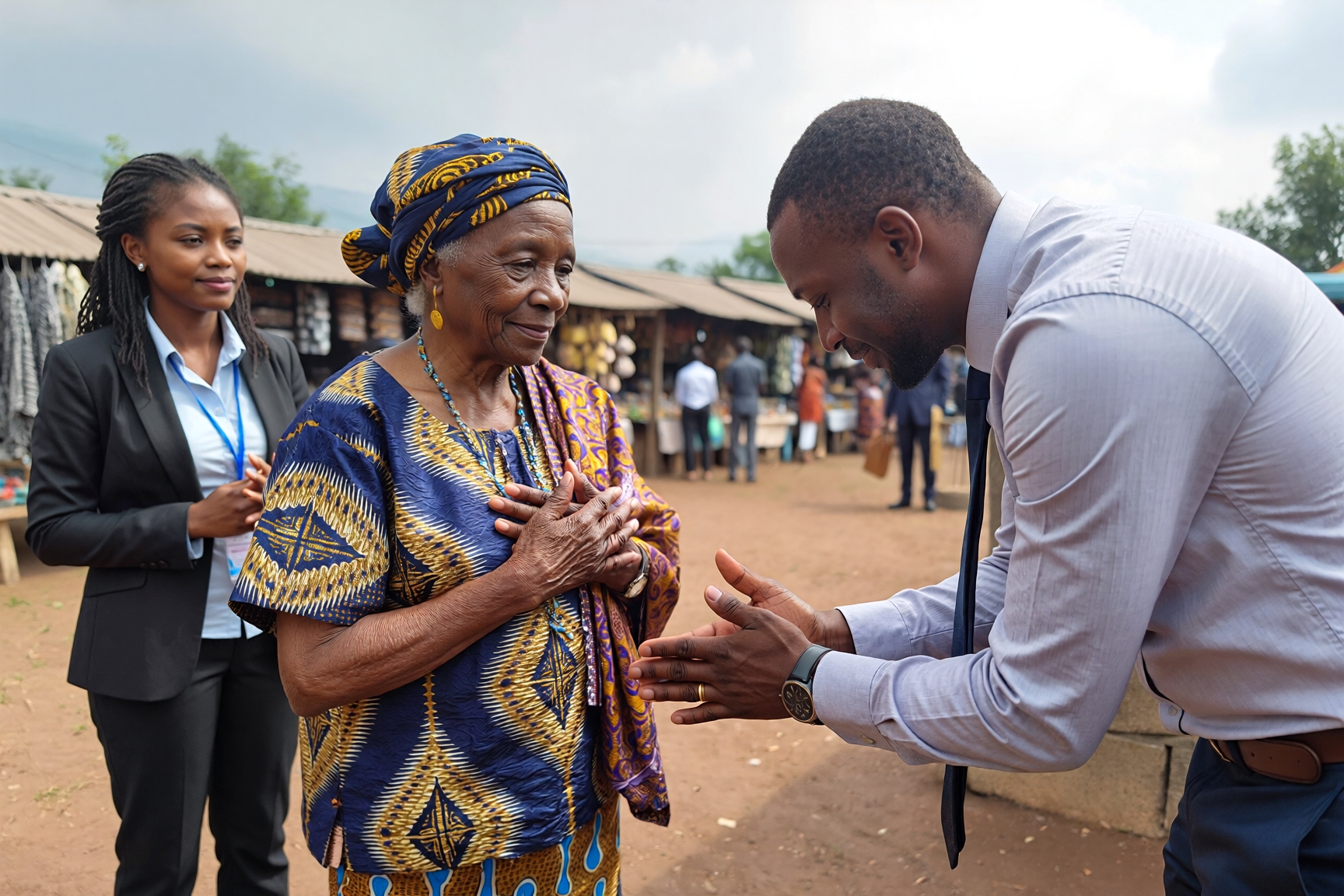
Welcome, dear friend. I need to tell you something quite important right at the start: this article represents months of research into Nigerian cultural protocols and years of experience observing how respect shapes every single interaction across this magnificently diverse nation of 371 ethnic groups. Understanding how to show respect to Nigerians isn't just about memorising a few greetings or gestures (though those certainly help!). It's about grasping the profound cultural values that underpin Nigerian society, where elders command automatic deference, where greeting protocols can make or break relationships, and where seemingly small gestures carry enormous social significance.
I'll never forget my first proper introduction to Nigerian respect culture. It happened in Lagos, at a friend's family compound in Surulere. I'd arrived for what I thought would be a casual Sunday lunch. Simple enough, right? Wrong! Before I could even sit down, my friend's younger brother demonstrated something that completely changed my understanding of social etiquette. When his elderly uncle entered the room, this 24-year-old university graduate immediately dropped to his knees, clasped his hands together, and greeted the uncle with elaborate formality that included inquiries about the uncle's health, his journey, his family, and his business. The entire exchange lasted perhaps two minutes, but the respect conveyed in those moments was absolutely palpable.
That's when I truly understood: showing respect in Nigerian culture isn't an afterthought or a nicety. It's the very foundation upon which all social interactions are built.
How to Show Respect to Nigerians?
Showing respect to Nigerians requires understanding and practising specific cultural protocols that vary across ethnic groups but share common principles. The most fundamental way to demonstrate respect involves mastering proper greeting protocols, which differ dramatically depending on the ethnic community you're engaging with. In Yoruba culture, younger men are expected to prostrate fully on the ground before elders, whilst women kneel or squat. The Igbo people demonstrate respect through elaborate verbal greetings accompanied by slight bows and specific hand positions, often clasping hands or placing one hand over the other. Hausa respect protocols emphasise appropriate titles and maintaining proper physical distance whilst greeting.
Beyond greetings, showing respect to Nigerians means using appropriate titles and honorifics rather than first names when addressing anyone older or in authority. Words like "Uncle," "Auntie," "Sir," "Ma," "Chief," or "Doctor" aren't optional courtesies but rather essential markers of social respect. According to the National Council for Arts and Culture, these respect protocols form the bedrock of Nigerian social cohesion, transcending ethnic boundaries whilst maintaining culturally specific expressions.
Body language plays an equally critical role. You must always use your right hand for eating, exchanging items, or shaking hands, as the left hand is considered unclean across most Nigerian cultures. Maintaining appropriate eye contact matters too. Direct, prolonged eye contact with elders can be interpreted as challenging or disrespectful, so younger people typically lower their gaze slightly when speaking with those older or more senior.
Let me share something that might surprise you. Refusing offered food or hospitality is generally considered quite disrespectful in Nigerian culture. When someone offers you a meal, they're not just feeding you. They're extending warmth, welcome, and regard. Even if you're genuinely not hungry, the proper response involves accepting at least a small portion or explaining your inability to eat with genuine regret and gratitude.
The concept of "home training" permeates Nigerian respect culture. This phrase refers to the social etiquette parents are expected to instil in their children from a very young age. A Nigerian with "no home training" is someone who fails to greet properly, addresses elders inappropriately, or displays poor manners. It's quite possibly the harshest character judgment in Nigerian society because it reflects not just on the individual but on their entire family upbringing.
I remember attending a business meeting in Abuja where an American consultant addressed the 60-year-old CEO by his first name during their initial introduction. The temperature in that boardroom dropped so precipitously you could practically see ice forming on the mahogany table! The meeting proceeded politely enough, but the deal ultimately went nowhere. The American never quite understood why his excellent proposal failed to gain traction, but everyone else in the room knew exactly what had happened. That single breach of respect protocol had undermined his credibility before he'd even opened his briefcase.
What Are 5 Ways to Show Respect?
Right, let's get practical about this, shall we? Understanding respect in theory is one thing, but actually demonstrating it in real Nigerian contexts requires specific, actionable knowledge. I've distilled years of observation and countless cultural interactions into five essential practices that will serve you remarkably well across Nigeria's diverse ethnic landscapes.
First, master the art of proper greetings. This cannot be overstated! In Nigerian culture, walking past someone you know without greeting them is considered shockingly rude. The greeting isn't just a quick "hello" either. It's a full exchange that acknowledges the person's presence, inquires about their wellbeing, and demonstrates that you value the relationship. In Yoruba contexts, this might involve prostration for men or kneeling for women when greeting elders. Amongst the Igbo, you might use specific hand gestures whilst bowing slightly. With Hausa communities, you'll want to use appropriate Islamic greetings like "As-salamu alaykum" (peace be upon you) along with respectful titles.
The greeting protocols I've observed across traditional Nigerian greeting culture vary beautifully but share a common thread: they're never rushed, never casual, and never optional.
Second, always use appropriate titles and honorifics. This practice transcends ethnic boundaries and applies universally across Nigerian society. Anyone significantly older than you should be addressed as "Uncle" or "Auntie" even if they're not related to you. Professional titles like "Doctor," "Engineer," "Chief," "Alhaji," or "Pastor" should always be used when applicable. First-name basis requires explicit permission from the elder person, and even then, many Nigerians prefer to maintain the formal address out of habit and respect.
I've watched foreign businesspeople struggle with this concept, thinking it's overly formal or unnecessary in professional settings. But here's the thing: in Nigerian corporate culture, hierarchy matters enormously. Addressing someone improperly doesn't just create awkwardness. It fundamentally undermines your professional credibility and can damage relationships beyond repair.
Third, observe proper speaking hierarchies and listening protocols. In Nigerian gatherings, particularly those involving family or traditional settings, elders speak first. Younger people listen attentively, maintain appropriate posture, and certainly don't interrupt. Contributing your opinion before being invited to do so can be seen as presumptuous and disrespectful. The Federal Ministry of Information and National Orientation has documented how these communication hierarchies reflect deep cultural values about wisdom, experience, and social order.
When you do speak, your tone matters as much as your words. Speaking loudly or aggressively, especially to elders, is considered extremely poor form. Measured, respectful tones demonstrate that you understand your place in the social hierarchy.
Fourth, demonstrate respect through hospitality and gift-giving. Nigerians place enormous value on generosity and proper hospitality. When visiting someone's home, bringing a small gift is always appreciated and shows respect for your host. This doesn't need to be expensive (a bottle of soft drink, biscuits, or fruit works perfectly well), but the gesture matters enormously. Similarly, when someone visits your home, offering food and drink isn't just polite. It's virtually mandatory! Even if you have very little, sharing what you have demonstrates respect for your guest and upholds your own honour.
I once visited a family in a modest Kano neighbourhood who had almost nothing in their kitchen but still insisted on preparing a meal for me. Refusing would have been unthinkable. Accepting graciously, even though I knew it placed a burden on their resources, showed respect for their hospitality and dignity.
Fifth, respect cultural and religious observances. Nigeria is predominantly Christian and Muslim, with traditional religious practices still influential in many communities. Showing respect means being mindful of these observances. During Ramadan in Muslim communities, eating or drinking in public during daylight hours is disrespectful. In Christian contexts, Sunday morning is sacred time for church attendance. Traditional festivals and ceremonies deserve your respect even if you don't personally participate in them.
The National Institute for Cultural Orientation works extensively to preserve and promote these cultural values, recognising that respect for tradition underpins social harmony in our magnificently diverse nation.
Remove your shoes when entering homes if requested (common in Muslim households). Dress modestly, particularly in religious or traditional settings. Women should generally avoid wearing revealing clothing, especially in northern Nigeria where Islamic influence is stronger. Men should dress appropriately too. Showing up to meet elders in shorts and flip-flops? That's a respect violation that won't be quickly forgiven!
What Is a Respectful Greeting Found in Nigeria?
Nigerian greetings represent some of the most elaborate and meaningful social rituals you'll encounter anywhere in the world. They're not quick exchanges but rather carefully choreographed demonstrations of respect, relationship acknowledgement, and social positioning. Let me walk you through the most common respectful greetings across Nigeria's major ethnic groups, because understanding these properly can quite literally make or break your social and professional relationships here.
In Yoruba culture, the greeting protocol is magnificently complex and deeply respectful. The basic greeting varies by time of day. "E ka aro" means "good morning," "E ka san" is "good afternoon," and "E ku irole" translates to "good evening." But notice that "E" prefix? That's the plural form, which conveys respect even when addressing a single person. If you're greeting someone your own age or younger, you might use the singular forms "Ka aro," "Ka san," or "Ku irole" instead, though many Nigerians default to the respectful plural form unless the relationship is quite close and informal.
The physical component of Yoruba greetings takes things to another level entirely. Younger men are expected to prostrate fully on the ground before elders, lying flat whilst greeting them. Younger women kneel, often placing both knees on the ground. This isn't theatre or exaggeration. It's genuine cultural practice that continues robustly even in modern urban contexts. I've watched university-educated professionals in expensive suits prostrate before their elderly relatives at family gatherings. The practice endures because it communicates profound respect that mere words cannot adequately convey.
Igbo greetings from southeastern Nigeria take a slightly different approach but maintain equal emphasis on respect demonstration. "Kedu?" serves as the universal "how are you?" whilst "Ndewo" functions as a general hello. "Nnoo" welcomes someone, and "Daalụ" expresses gratitude. But similar to Yoruba, Igbo has formal and informal registers, and choosing the wrong one can create significant social awkwardness.
Physically, respect demonstrations in Nigerian culture involve slight bows whilst greeting, specific hand positions (often clasping both hands together or placing one hand over the other), and using appropriate titles. Addressing an older Igbo person requires adding "Dede" (uncle) or "Nne" (mother) even when they're not biologically related to you. The elaborate verbal component typically includes extensive inquiries about the person's health, their family members by name, their business affairs, and recent travels.
I once watched an Igbo greeting between two distant relatives who hadn't seen each other in years. The exchange lasted a full ten minutes and covered multiple generations of family members, inquiring about the wellbeing of aunts, uncles, cousins, children, and even long-deceased ancestors! To the uninitiated, it might seem excessive. But to the participants, it demonstrated genuine care and maintained the social bonds that define community in Igbo culture.
Hausa greetings from northern Nigeria reflect both traditional respect protocols and Islamic influences. The standard greeting is "Sannu" (hello) or the more formal Islamic "As-salamu alaykum" (peace be upon you), to which the proper response is "Wa alaykumu s-salaam" (and upon you be peace). But Hausa culture has developed what I find to be one of the most beautiful greeting innovations: activity-based greetings that acknowledge and respect whatever the person is currently doing.
If someone is eating, you say "Sannu da abinci" (greetings for your food). If they're working, "Sannu da aiki" (greetings for your work). If they're travelling, "Sannu da tafiya" (greetings for your journey). This system shows tremendous respect for the person's specific experience rather than offering a generic greeting that ignores their current activity or state.
In professional Nigerian contexts, particularly in cities like Lagos, Abuja, and Port Harcourt, greetings have adapted somewhat to modern life's faster pace. Yet even abbreviated greetings still carry cultural weight. You absolutely cannot walk past someone you know without acknowledging them. A quick "Good morning, sir" whilst slightly bowing your head might replace the full prostration in an office setting, but the respect gesture remains non-negotiable.
Morning greetings in Nigeria extend until noon, not just the early hours. Afternoon greetings run from noon until roughly 6pm. Evening greetings take over after 6pm. Getting this timing wrong isn't a disaster, but getting it right demonstrates cultural awareness that Nigerians genuinely appreciate.
Here's something that often surprises foreigners: when you meet someone in Nigeria, particularly in less urban areas, you're expected to greet not just them but to inquire about their entire family. "How is your wife?" "How are the children?" "How is your mother?" These aren't invasive questions but rather demonstrations that you care about their whole family network, not just them as individuals. Family is everything in Nigerian culture, and respecting someone means respecting their family connections too.
The handshake greeting deserves special mention. In many Nigerian cultures, particularly when greeting elders or social superiors, you offer or receive a handshake with your right hand whilst your left hand touches your right elbow or wrist. This gesture demonstrates humility and respect. I do this unconsciously now, even when greeting non-Nigerians! It's become so ingrained that using a single-handed handshake feels disrespectful even in contexts where it's perfectly normal.
Regional Respect Protocol Comparison
Here's a comprehensive breakdown of how respect protocols vary across Nigeria's major ethnic groups. Understanding these differences can help you navigate Nigeria's cultural complexity with greater confidence.
This table really drives home something crucial: whilst all Nigerian ethnic groups value respect enormously, the specific ways they express and demonstrate that respect vary considerably. What works perfectly in Lagos might be inadequate in Kano, and what's appropriate in Enugu might differ from what's expected in Benin City.
The good news? Nigerians are generally quite forgiving of foreigners who make honest mistakes whilst clearly trying to show respect. What they won't forgive is obvious arrogance, refusal to learn proper protocols, or dismissive attitudes toward their cultural values. Show genuine effort to understand and respect Nigerian customs, and you'll find Nigerians remarkably warm, generous, and welcoming.
How Do You Show Respect to People from Other Cultures?
Right, let's zoom out a bit and discuss the broader principles that apply when showing respect to people from any culture, not just Nigerian. This feels particularly relevant because Nigeria itself contains such extraordinary cultural diversity that navigating it successfully actually teaches you skills applicable globally. After years researching respect protocols across Nigerian traditional etiquette, I've identified several universal principles that transcend specific ethnic or national boundaries.
First, approach with genuine humility and recognition that you don't automatically understand everything. This might sound obvious, but I've watched countless people (myself included, in earlier years!) enter new cultural contexts assuming their own norms are universal or that brief observations qualify them as experts. The reality is that culture runs deep. What seems simple on the surface often conceals layers of meaning, history, and significance that require time and genuine curiosity to understand properly.
When I first started researching Nigerian culture, I thought greeting protocols were just elaborate politeness. It took months before I grasped that greetings actually serve as continuous relationship maintenance rituals, social positioning mechanisms, and community bonding practices all rolled into elegant, efficient exchanges. Surface observation would never have revealed that depth.
Second, invest time in learning basic language phrases and their proper usage. Even attempting to use local greetings demonstrates enormous respect. You don't need fluency! Just learning "Sannu" (Hausa), "Bawo ni" (Yoruba), or "Kedu" (Igbo) for "how are you?" shows that you value the culture enough to make effort. Nigerians absolutely light up when foreigners attempt their languages, even imperfectly. That effort matters more than perfection.
But here's the crucial bit: learn not just the words but when and how to use them properly. Some phrases are appropriate only for specific times of day, particular relationships, or certain social contexts. Asking locals for guidance shows humility and respect for their expertise about their own culture.
Third, observe carefully before participating, especially in unfamiliar situations. When you're uncertain about protocols, watching what others do provides invaluable guidance. At Nigerian ceremonies, traditional gatherings, or family events, take time to observe greeting patterns, speaking hierarchies, and behavioural expectations before jumping in. Notice who speaks first, who sits where, how people position their bodies, what gestures they use.
I learned this lesson rather painfully at a traditional Edo ceremony when I inadvertently sat in a seat reserved for elders. The disapproving glances and uncomfortable shuffling alerted me to my mistake, but the damage was done. If I'd watched more carefully before sitting, I'd have noticed that younger people remained standing until directed to specific seats by the elders present.
Fourth, demonstrate respect for local customs even when you don't fully understand or personally agree with them. You don't have to adopt every practice as your own, but dismissing or criticising cultural traditions whilst you're a guest in that culture is profoundly disrespectful. If you find yourself uncomfortable with certain practices, the appropriate response is polite distance rather than vocal critique or visible disapproval.
This particularly matters regarding gender roles, religious practices, and traditional hierarchies that might differ from your own cultural values. You can maintain your personal beliefs whilst still showing respect for others' different perspectives. Creating space for cultural differences doesn't require abandoning your own values. It requires recognising that diverse approaches to life, relationships, and society all have legitimacy within their own contexts.
Fifth, ask questions thoughtfully when appropriate, framing them as genuine curiosity rather than judgment. Most people appreciate sincere interest in their culture and will happily explain customs, traditions, and protocols when approached respectfully. But timing and framing matter enormously. Asking "Why do Yoruba men prostrate?" during a quiet moment with a friend demonstrates curiosity. Questioning the practice loudly during an actual ceremony suggests disrespect.
I've found that phrases like "I'd love to understand better..." or "Could you help me learn about..." open doors beautifully. They position you as a learner rather than a critic, which makes people much more willing to share their knowledge and perspectives.
Sixth, recognise that food and hospitality carry enormous cultural significance in many societies. Refusing offered food or drink can be deeply offensive in cultures where hospitality is central to social identity. In Nigerian contexts specifically, food represents far more than sustenance. It's welcome, it's relationship, it's respect made edible!
When visiting Nigerian homes, expect to be offered food regardless of the time of day or your stated hunger level. The polite response is accepting at least something, even if just a small portion. If you genuinely cannot eat (religious restrictions, severe allergies, medical issues), explain with genuine regret and appreciation for the offer. Never just say "No" without explanation!
Finally, understand that respect protocols often exist in hierarchical layers based on age, social position, or traditional authority. Many cultures, including all Nigerian ethnic groups, maintain strong respect hierarchies where age commands automatic deference, traditional rulers receive elaborate protocols, and social superiors expect specific forms of address and behaviour. These hierarchies might feel uncomfortable if you come from more egalitarian cultural backgrounds, but they're not arbitrary or oppressive within their own contexts. They represent sophisticated social systems that have maintained community cohesion across centuries.
The fascinating part is how these universal principles of cultural respect actually work together. Humility enables learning. Observation informs practice. Language attempts demonstrate effort. Thoughtful questions deepen understanding. Hospitality acceptance builds relationships. Hierarchy respect maintains harmony. It's rather like a complete social operating system that, once you understand it, makes navigating any new cultural context significantly easier.
Seven Essential Steps for Showing Respect in Nigerian Contexts
Let me give you a practical, step-by-step framework that synthesises everything we've discussed into actionable guidance you can actually use when engaging with Nigerians. I've developed this approach through years of observation, countless conversations with Nigerian friends and colleagues, and yes, more than a few embarrassing mistakes that taught me what not to do!
Step 1: Research the specific ethnic group you'll primarily engage with. Nigeria contains 371 distinct ethnic groups, and whilst certain respect principles transcend ethnic boundaries, the specific protocols vary considerably. If you're heading to Lagos, learn Yoruba customs. Travelling to Kano? Hausa-Fulani protocols are essential. Working in Port Harcourt? You'll encounter Ijaw, Ikwerre, and other Niger Delta cultures. Visiting Enugu? Igbo customs dominate. This research doesn't require academic depth, but basic understanding of major greeting protocols, appropriate titles, and key cultural values will serve you remarkably well.
I typically spend at least an hour researching specific customs before visiting any new Nigerian region. That modest investment has prevented countless social mishaps and opened doors that would have remained firmly shut otherwise.
Step 2: Master the basic greetings in relevant local languages before your first interaction. Learn "good morning," "good afternoon," "good evening," "how are you?" and "thank you" in the predominant local language. Practice pronunciation by watching videos or asking Nigerian friends for guidance. Your attempts don't need perfection! The effort itself demonstrates respect that Nigerians genuinely appreciate.
When I first started attempting Yoruba greetings, my pronunciation was absolutely dreadful. But elder Yoruba speakers would light up with delight, correct me gently, and warm to me immediately because the effort showed respect for their culture and language. That goodwill opened conversations and relationships that perfect English never would have.
Step 3: Observe and replicate the physical greeting protocols appropriate to the context. If you're male and greeting an elderly Yoruba man, be prepared to kneel or at minimum bow deeply from the waist. If you're female in any Nigerian context greeting elders, a slight curtsy or squat is appropriate. In professional settings, offer handshakes with both hands or with your left hand supporting your right elbow. Watch what others do and match their level of formality rather than imposing your own casual standards.
Yes, these physical demonstrations might feel awkward initially, especially if they're foreign to your own cultural background. But that momentary awkwardness is nothing compared to the respect you demonstrate by making the effort. I've prostrated before Yoruba elders despite being raised in a culture where such gestures don't exist. It felt strange the first time. Now it feels like proper respect.
Step 4: Use appropriate titles consistently until explicitly told otherwise. Address anyone older as "Uncle," "Auntie," "Sir," or "Ma." Use professional titles like "Doctor," "Engineer," "Chief," "Alhaji," or "Pastor" when applicable. Never assume first-name basis is acceptable, even in seemingly casual contexts. Let the Nigerian person you're interacting with explicitly invite you to use their first name. Many will maintain the formal address indefinitely, and that's perfectly fine!
I worked with a Nigerian colleague for three years before he finally said "You can call me Chidi." Until that explicit invitation, I'd consistently addressed him as "Mr Okafor," and that consistency demonstrated ongoing respect that strengthened our professional relationship enormously.
Step 5: Demonstrate active listening and appropriate speaking hierarchy. In group settings with Nigerians, particularly those involving family or traditional contexts, listen far more than you speak. Wait for elders to finish completely before contributing your thoughts. Never interrupt, even if you disagree or have vital information to add. Maintain appropriate body language: attentive posture, respectful eye contact (not prolonged staring), hands visible and still rather than fidgeting.
This requirement for patient listening can frustrate people from cultures where rapid-fire dialogue and friendly interruption are normal communication patterns. But in Nigerian contexts, interrupting elders or speaking out of turn marks you as disrespectful and poorly raised. The wait is worth it.
Step 6: Accept hospitality graciously and reciprocate appropriately. When Nigerians offer you food, drink, or gifts, accept with genuine gratitude even if you're not hungry or don't particularly want what's offered. Eat at least something to show respect for the hospitality. When visiting Nigerian homes, bring a modest gift (soft drinks, biscuits, fruit work perfectly and typically cost ₦500-₦2,000). When Nigerians visit you, offer food and drink immediately. These hospitality exchanges aren't optional extras but rather fundamental respect demonstrations.
The poorest Nigerian homes will offer you something to eat or drink. Refusing insults their hospitality and dignity. I've accepted countless meals I didn't particularly want because accepting showed respect for the host's generosity and maintained the social bond between us.
Step 7: Dress modestly and appropriately for the context and region. Nigeria's south tends toward more relaxed dress codes (though still more conservative than Western standards), whilst the north expects significantly more modesty due to stronger Islamic influence. Women should generally avoid short skirts, revealing tops, or tight clothing, particularly when meeting elders or attending traditional ceremonies. Men should avoid shorts, sleeveless shirts, or overly casual attire in formal situations. When in doubt, err on the side of more conservative, more formal clothing.
I once attended a business meeting in Abuja wearing what I considered appropriate business casual: pressed trousers and a polo shirt. Everyone else wore full suits and ties. My underdressing didn't derail the meeting, but it certainly signalled that I didn't fully understand Nigerian professional expectations. I never made that mistake again!
Following these seven steps won't make you an instant expert in Nigerian respect culture, but they'll position you far better than most foreigners and demonstrate the genuine effort that Nigerians value. Remember: Nigerians are generally quite forgiving of honest mistakes made whilst clearly trying to show respect. What they won't forgive is arrogance, dismissiveness, or refusal to learn and adapt to their cultural values.
Understanding Respect Beyond Surface Protocols
Here's something I wish someone had told me years ago when I first started engaging deeply with Nigerian culture: respect isn't just about executing the right greeting or using appropriate titles. Those external demonstrations matter enormously, certainly. But they're expressions of deeper values that underpin entire worldviews about age, wisdom, community, and social order.
In Nigerian culture, age inherently commands respect regardless of economic status, education level, or professional achievement. This isn't arbitrary or old-fashioned. It reflects a fundamental belief that accumulated years equal accumulated wisdom, experience, and perspective worth honouring. Elders have survived challenges, navigated complexities, and accumulated knowledge that younger people simply haven't had time to acquire yet. Respecting age means respecting that lived experience and the wisdom it generates.
This creates what might seem like paradoxical situations to outsiders. A highly educated young professional might kneel before an elderly relative with minimal formal education. A wealthy businessman might prostrate before his elderly uncle who lives modestly. The education and economic disparity doesn't override the age-based respect hierarchy because the hierarchy isn't fundamentally about education or money. It's about honouring the life journey and accumulated wisdom that age represents.
Family relationships in Nigerian culture extend far beyond nuclear family units. You have "uncles" and "aunties" who aren't biologically related to you at all. These titles express social relationship and respect rather than genetic connection. Your parents' friends become your aunties and uncles. Older neighbours become auntie and uncle. Even your parents' colleagues might be addressed as uncle or auntie. This expansive family network creates social safety nets, community bonds, and mutual obligation systems that function rather like insurance policies during difficult times.
When you show respect to a Nigerian by using appropriate titles and protocols, you're not just being polite to an individual. You're acknowledging and participating in these wider family and community networks that define Nigerian social organisation. That's why violations of respect protocols feel so serious. They don't just offend individuals. They potentially damage relationship networks that extend far beyond the immediate interaction.
Community takes precedence over individualism in Nigerian culture in ways that can be challenging for people raised in more individualistic societies to fully grasp. Your achievements bring honour to your entire family and village. Your failures shame them too. This communal orientation means that respect isn't just about individual relationships. It's about maintaining the social harmony that enables communities to function cohesively.
The elaborate greeting rituals, speaking hierarchies, and hospitality protocols that might seem excessive or time-consuming actually serve essential social functions. They continuously reinforce community bonds, clarify social positioning, demonstrate ongoing relationship investment, and create regular opportunities for conflict prevention through maintained respect.
I've watched Nigerian communities navigate serious disagreements and potential conflicts that would have exploded into violence or litigation in more individualistic contexts. Instead, respect for traditional authority, careful observance of speaking hierarchies, and communal mediation approaches resolved the issues whilst maintaining relationships. The respect protocols that seem merely polite actually enable sophisticated conflict resolution and community maintenance.
Religion profoundly influences Nigerian respect culture too. Christianity and Islam both emphasise honour for elders, hospitality to strangers, and specific gender protocols. Traditional African religions that persist alongside Christianity and Islam also stress respect for ancestors, elders as spiritual authorities, and community harmony as essential to spiritual wellbeing. These religious influences have woven themselves so thoroughly into cultural practices that separating religious from purely cultural elements is nearly impossible.
When you demonstrate proper respect in Nigerian contexts, you're participating in values that feel sacred, not merely social. Disrespecting elders doesn't just violate social etiquette. It violates religious principles that many Nigerians hold deeply. That's why the emotional and social consequences of disrespect can be so severe.
Understanding these deeper foundations transforms respect from a list of behaviours to memorise into a coherent value system you can actually internalise. Once you grasp why Nigerians value respect so highly, the specific protocols make intuitive sense rather than feeling like arbitrary rules imposed from outside.
Navigating Modern Changes in Respect Culture
Let's be honest about something important: Nigerian respect culture is evolving, particularly in urban contexts where globalisation, technology, and changing economic realities are creating new patterns. Understanding these changes helps you navigate contemporary Nigerian society more effectively without assuming that traditional protocols have disappeared or become irrelevant.
Young, educated Nigerians increasingly navigate between traditional respect requirements and more casual global communication styles. In professional WhatsApp groups, for instance, you might see relatively informal exchanges that would have been unthinkable in face-to-face interactions. Yet when those same people meet physically, traditional respect protocols reassert themselves immediately. This code-switching between contexts demonstrates adaptation rather than abandonment of respect culture.
I've watched Nigerian professionals in their twenties and thirties prostrate before elderly relatives at family gatherings, then return to their Lagos offices where they address their 50-year-old supervisors with first names in casual email exchanges. The context determines which respect protocol applies, and young Nigerians have become remarkably sophisticated at navigating these different expectations.
Urban environments, particularly Lagos, Abuja, and Port Harcourt, have compressed traditional greeting rituals somewhat. The full ten-minute family inquiry greeting that remains standard in rural areas has shortened to perhaps thirty seconds in busy Lagos streets. But notice: it shortened, it didn't disappear! You still absolutely must acknowledge people you know. You still use appropriate titles. You still inquire about wellbeing, just more efficiently.
The physical aspects of respect demonstration have also adapted. Younger people might bend at the waist rather than fully prostrating in some urban contexts. Women might squat briefly rather than kneeling for extended periods. These modifications make the protocols more compatible with modern professional attire and fast-paced environments whilst preserving the core respect demonstration.
However, certain contexts remain stubbornly traditional regardless of urbanisation or modernity. Traditional ceremonies, family gatherings, meetings with traditional rulers, and interactions in village settings still demand full traditional respect protocols. Young Nigerians understand these context-based expectations and adjust accordingly. Foreigners need similar contextual awareness to avoid serious social mishaps.
Technology has created interesting respect challenges too. Should you use honorifics in text messages? How casual can email communication be with elders? When does WhatsApp allow first-name basis? Different Nigerians answer these questions differently, creating potential for confusion and inadvertent disrespect. My general rule: when in doubt, default to more formal, more respectful approaches. You won't offend anyone by being too respectful, but you absolutely can offend by being too casual.
Women's changing economic and educational status has created subtle shifts in respect dynamics too. Highly educated, economically successful Nigerian women command respect that wouldn't have been automatic in previous generations. Yet these same women often navigate complex expectations about maintaining traditional gender protocols whilst asserting professional authority. Showing proper respect means being sensitive to these tensions without assuming traditional gender hierarchies have completely collapsed or that they've remained entirely unchanged.
Intergenerational differences sometimes create respect confusion. Some older Nigerians complain that young people have "lost respect" and don't maintain traditional protocols adequately. Some younger Nigerians argue that rigid respect hierarchies stifle innovation and maintain unjust power structures. These debates happen within Nigerian families and communities constantly. As an outsider engaging with Nigerian culture, you're not required to resolve these tensions! You just need to be aware they exist and navigate them thoughtfully.
My approach has been to observe which respect protocols the specific Nigerians I'm engaging with seem to value most, then honour those protocols consistently. Some Nigerian friends have explicitly invited me to be quite casual with them. Others maintain more traditional formality even after years of relationship. Matching their preferences demonstrates respect for their individual choices about how they want their culture expressed in their personal relationships.
Connecting Respect to Broader Nigerian Cultural Values
Understanding Nigerian respect protocols becomes significantly easier when you connect them to the broader cultural values that shape Nigerian society. Respect doesn't exist in isolation but rather forms part of an integrated value system that includes hard work, hospitality, education, family loyalty, religious faith, and national pride.
The emphasis on hard work that defines the famous "Nigerian hustle" connects directly to respect culture. Nigerians respect those who work diligently to improve their circumstances and support their families. Lazy or entitled attitudes earn contempt regardless of one's age or social position. This explains why successful Nigerians often maintain elaborate respect protocols even when interacting with people from humble backgrounds who demonstrate strong work ethic.
Hospitality represents another core Nigerian value that intertwines with respect. Offering food, drink, and accommodation to guests isn't just politeness but rather a fundamental expression of respect and human dignity. The poorest Nigerian home will offer something to a visitor because refusing hospitality would shame the host. When you accept Nigerian hospitality graciously, you're participating in this core value whilst showing respect for your host's dignity.
Education commands enormous respect in Nigerian culture. Parents make extraordinary sacrifices to educate their children, viewing education as the primary pathway to social advancement. Educated Nigerians typically receive additional respect markers, with titles like "Doctor" or "Professor" carrying tremendous weight. This explains why older educated Nigerians expect particular deference and why even young people with advanced degrees show elaborate respect to elders, recognising that formal education doesn't override age-based respect hierarchies.
Family loyalty represents perhaps the deepest Nigerian value, surpassing even individual achievement or personal happiness in many contexts. Your primary obligation is to your family, extended network, and village of origin. This explains why respect protocols extend so far beyond nuclear family boundaries and why disrespecting someone potentially damages relationships across entire family networks.
Religious faith, whether Christian, Muslim, or traditional, profoundly shapes Nigerian identity and values. Religious Nigerians (which includes the vast majority of the population) understand respect as a religious duty, not merely social convention. The Fourth Commandment, "Honour your father and mother," and similar Islamic teachings about respecting elders aren't abstract principles but rather lived practice that manifests in daily respect protocols.
National pride creates interesting dynamics too. Despite Nigeria's challenges, many Nigerians feel deep pride in their cultural heritage, diverse ethnic groups, and contributions to African culture globally. Showing respect for Nigerian customs demonstrates that you recognise and honour this cultural richness rather than dismissing it as backward or inferior to Western practices.
Looking at how these values interrelate makes Nigerian respect culture less mysterious and more comprehensible. An elderly Nigerian who worked hard to educate their children, maintained family connections across decades, demonstrated faithful religious practice, and extended hospitality generously deserves respect not just for their age but for embodying the core values that define Nigerian society. The elaborate protocols that might seem excessive actually represent appropriate honour for people who've lived these values consistently.
Practical Considerations for Long-term Engagement
If you're planning extended time in Nigeria rather than brief visits, several practical considerations about respect culture deserve attention. Long-term engagement requires deeper cultural integration than short-term tourism or business trips, and your respect demonstrations need to be sustainable rather than just performative gestures for brief interactions.
First, invest in language learning beyond basic greetings. Conversational ability in Hausa, Yoruba, or Igbo (depending on your location) dramatically deepens relationships and demonstrates serious commitment to cultural integration. Language learning shows respect through ongoing effort rather than one-time gestures. It enables you to participate in conversations, understand cultural nuances embedded in language, and engage more authentically with Nigerian communities.
I've spent years learning Yoruba, and whilst my proficiency remains quite limited, the effort itself has opened doors and relationships that would have remained closed otherwise. Nigerians see language learning as the ultimate respect demonstration because it requires sustained commitment over time.
Second, develop genuine friendships with Nigerians across age groups and social positions. These relationships become your cultural guides, helping you navigate ambiguous situations and understand respect protocols in specific contexts. Nigerian friends will typically warn you if you're about to commit a serious social error and explain cultural dynamics that remain invisible to outsiders.
But here's the crucial part: these friendships must be genuine, not transactional. Nigerians can tell the difference between people who value them as humans versus people who cultivate relationships merely for practical benefit. Authentic friendships based on mutual respect and genuine interest create long-term support networks that enrich your Nigerian experience immeasurably.
Third, participate in family and community events when invited. Attending Nigerian weddings, naming ceremonies, burial rites, and religious celebrations demonstrates respect through presence and participation. These events provide invaluable opportunities to observe and practice respect protocols in authentic contexts whilst building relationships across community networks.
Bring appropriate gifts to these celebrations. For weddings, contributing to aso-ebi (family uniform fabric) or giving cash gifts wrapped in envelopes works well, typically ₦5,000-₦20,000 depending on your relationship closeness and economic means. For naming ceremonies, gifts for the baby and mother are appropriate. For funerals, contributing toward burial expenses demonstrates respect for the deceased and support for the grieving family.
Fourth, accept that you'll make mistakes and handle them gracefully. Despite your best efforts, you will occasionally violate respect protocols, use wrong titles, or commit social errors. When this happens, apologise sincerely, express your desire to learn properly, and do better next time. Nigerians generally forgive mistakes made in good faith whilst showing genuine effort to improve.
I've committed countless respect violations over the years: using overly casual language with elders, sitting in wrong places at ceremonies, forgetting appropriate titles, and more. Each time, sincere apology and visible effort to improve maintained relationships despite my errors. What damages relationships isn't mistakes but rather dismissive attitudes about those mistakes or refusal to acknowledge and correct them.
Finally, recognise that truly understanding Nigerian respect culture requires years, not months. Cultural competence develops gradually through repeated exposure, ongoing relationship building, and accumulated experience. Be patient with yourself whilst maintaining consistent effort to learn and improve. The depth and complexity of Nigerian culture rewards long-term engagement with rich relationships, deep understanding, and genuine cultural integration that brief exposure simply cannot provide.
For those considering business, ministry, education, or long-term residence in Nigeria, understanding and consistently demonstrating proper respect protocols isn't optional. It's absolutely fundamental to your success and integration. Nigerian colleagues, employees, church members, students, or neighbours will judge your character significantly through your respect demonstrations. Getting this right opens doors. Getting it wrong closes them permanently.
The investment in learning proper Nigerian respect culture pays dividends far beyond the effort required. You'll build stronger relationships, navigate social situations more successfully, understand Nigerian society more deeply, and ultimately experience Nigeria more authentically than foreigners who remain culturally isolated within expatriate bubbles.
Cultural Sensitivity When Discussing Marriage and Family Structures
Before moving to our conclusion, let me address one area where respect protocols become particularly complex and important: Nigerian marriage and family structures. Understanding proper respect approaches in these contexts helps you navigate potentially sensitive topics whilst maintaining appropriate relationships with Nigerian friends and colleagues.
Marriage customs in Nigeria vary dramatically across ethnic groups and religious contexts, creating potential for misunderstanding if you approach these topics without cultural sensitivity. What's considered normal or acceptable in one Nigerian community might be viewed quite differently in another. Demonstrating respect means not imposing your own cultural assumptions about relationships, marriage, or family structure onto Nigerian contexts.
For instance, polygamy remains legal under customary and Islamic law in Nigeria, though statutory marriage requires monogamy. Some Nigerian communities practise and accept polygamy, whilst others consider it outdated or problematic. When engaging with Nigerians on this topic, demonstrating respect means avoiding judgment about their specific family structures whilst being honest about your own cultural values if asked directly.
Family size represents another area requiring cultural sensitivity. Large families remain common and valued in many Nigerian communities, with children representing wealth, security, and blessing rather than economic burden. Commenting negatively about family size or questioning Nigerians' decisions to have many children demonstrates cultural insensitivity and disrespect for values that remain quite important to many Nigerians.
The role of extended family in Nigerian marriages and child-rearing also differs significantly from Western nuclear family patterns. Nigerian spouses often maintain close involvement with their birth families even after marriage, and extended family members participate actively in marriage decisions and child-rearing. What might seem like inappropriate family interference from Western perspectives represents normal, expected family involvement from Nigerian cultural viewpoints.
When Nigerian friends or colleagues discuss their family situations with you, demonstrating respect means listening without judgment, asking thoughtful questions to understand their perspective better, and avoiding assumptions that your cultural approaches to relationships and family are universal or superior. Respect doesn't require you to adopt Nigerian family structures for yourself, but it does require acknowledging that different cultural approaches to family have legitimacy within their own contexts.
Similarly, understanding the culture of marriage helps you navigate conversations about relationships, dating, and partner selection with appropriate cultural sensitivity. Nigerian marriage decisions often involve extensive family consultation and approval in ways that might feel constraining from more individualistic cultural perspectives. Respecting Nigerian friends means supporting their navigation of these family expectations rather than encouraging them to prioritise individual desires over family harmony.
These topics become particularly complex in interfaith or intercultural Nigerian marriages, where couples navigate expectations from different religious and ethnic communities simultaneously. Showing respect means recognising the complexity these couples face without simplifying their experiences or assuming one cultural approach should dominate.
Final Thoughts on Showing Respect to Nigerians
After months of research into respect protocols and years of experiencing Nigerian cultural hospitality firsthand, I can tell you this with absolute certainty: understanding how to show respect to Nigerians opens doors to relationships, opportunities, and experiences that remain firmly closed to those who approach Nigerian culture casually or dismissively.
Nigerian respect culture isn't arbitrary tradition maintained merely because "that's how it's always been done." It represents sophisticated social systems that maintain community cohesion, enable conflict resolution, reinforce essential values, and create the relationship networks that function as social safety nets in contexts where formal institutional support often proves inadequate or unreliable.
When you master Nigerian greetings, use appropriate titles, demonstrate proper physical respect gestures, accept hospitality graciously, observe speaking hierarchies, and dress appropriately, you're not just following rules. You're participating in value systems that have maintained social order and community wellbeing across centuries despite colonialism, civil war, economic challenges, and rapid modernisation.
The beautiful part is how Nigerians respond to genuine respect demonstrations. Show proper respect to Nigerians, and you'll experience warmth, generosity, and welcome that goes far beyond what you'd encounter in more transactional cultural contexts. Nigerians genuinely appreciate when foreigners make effort to learn and honour their customs. That appreciation manifests in opened doors, extended invitations, shared meals, genuine friendships, and loyalty that endures across years and difficulties.
Conversely, failing to show proper respect damages relationships in ways that are difficult to repair. Nigerians might remain polite to foreigners who violate respect protocols, but trust, genuine welcome, and deeper relationship opportunities will remain limited. Get respect right, and Nigeria rewards you magnificently. Get it wrong, and you'll remain perpetually outside looking in, wondering why relationships never quite deepen beyond surface level.
The fascinating part is how learning Nigerian respect culture actually makes you better at navigating any cultural context. The skills you develop showing respect to Nigerians, observing carefully before acting, asking thoughtful questions, accepting hospitality graciously, demonstrating humility about what you don't understand, transfer beautifully to other cultural encounters. Nigeria's cultural complexity creates a masterclass in cross-cultural competence.
My final encouragement is this: approach Nigerian culture with genuine curiosity, authentic humility, and sustained effort. Don't expect to master respect protocols instantly. Accept that you'll make mistakes whilst showing visible commitment to learning properly. Invest in relationships with Nigerians who can guide you through cultural complexities. Participate in community and family events when invited. Study the languages. Honour the traditions.
Nigeria rewards this investment generously. You'll discover a culture of remarkable depth, warmth, and resilience. You'll build relationships that enrich your life in ways you couldn't have anticipated. You'll develop cultural competence that serves you globally. And you'll experience the profound satisfaction of genuine cross-cultural connection built on mutual respect and authentic relationship.
That's worth far more than any brief discomfort from prostrating before elders or the time required to learn proper greetings!
Key Takeaways for Showing Respect to Nigerians
* Master proper greetings in local languages with appropriate physical gestures (prostration for Yoruba men, kneeling for women across cultures, activity-based Hausa greetings) whilst consistently using respectful titles like Uncle, Auntie, Sir, or Ma for anyone older or in authority, never assuming first-name basis without explicit invitation.
* Demonstrate respect through hospitality acceptance, right-hand-only use for eating and exchanging items, appropriate dress codes, observing speaking hierarchies where elders speak first, and accepting that age commands automatic respect regardless of education or economic status in Nigerian cultural contexts.
* Invest in long-term cultural learning through language study, genuine friendship building, participation in family events, graceful handling of inevitable mistakes with sincere apologies, and recognition that true cultural competence develops over years through sustained engagement with Nigerian communities rather than brief exposure.
FAQ Section: Understanding Respect in Nigerian Culture
How do you greet elders respectfully in Nigeria?
Greeting elders in Nigeria requires both verbal and physical demonstrations of respect that vary by ethnic group. In Yoruba contexts, younger men should prostrate fully on the ground whilst younger women kneel, using respectful greetings like "E ka aro" (good morning) with the plural "E" prefix that conveys respect even when addressing a single person.
What titles should you use when addressing Nigerians?
Use "Uncle" or "Auntie" for anyone significantly older even if not related, "Sir" or "Ma" for general respect, and professional titles like "Doctor," "Engineer," "Chief," "Alhaji," or "Pastor" when applicable. Never use first names with elders or authority figures unless they explicitly invite you to do so, as this constitutes serious disrespect in Nigerian culture.
Why can't you use your left hand in Nigeria?
The left hand is considered unclean across most Nigerian cultures because of its traditional use for personal hygiene in contexts where water rather than paper is used. You must always eat with your right hand, pass items with your right hand, and shake hands only with your right hand, as left-hand use is deeply offensive and suggests disrespect or poor home training.
How do you show respect through greetings in Hausa culture?
Hausa greetings emphasise Islamic formality and activity-based acknowledgement of what someone is currently doing. Use "As-salamu alaykum" (peace be upon you) as formal greeting, followed by specific phrases like "Sannu da abinci" (greetings for your food) if they're eating or "Sannu da aiki" (greetings for your work) if they're working, showing respect for their specific activity rather than generic greetings.
What does "home training" mean in Nigerian culture?
"Home training" refers to the social etiquette, respect protocols, and proper manners parents are expected to instil in their children from young ages. Saying someone has "no home training" represents one of the harshest character judgments in Nigerian society because it reflects poorly not just on the individual but on their entire family's child-rearing, particularly regarding greeting protocols and elder respect.
How should you accept hospitality from Nigerians?
Always accept offered food or drink graciously even if you're not hungry, as refusing constitutes significant disrespect since hospitality represents welcome, generosity, and the host's regard for you. Eat at least a small portion to honour your host, and if you genuinely cannot eat due to medical or religious restrictions, explain with genuine regret and appreciation rather than simply saying "no."
What role does age play in Nigerian respect culture?
Age commands automatic respect in Nigerian culture regardless of economic status, education level, or professional achievement because accumulated years represent accumulated wisdom and life experience worth honouring. A young professional might kneel before an elderly relative with minimal education because the respect hierarchy prioritises life experience over formal credentials or wealth.
How do Igbo people demonstrate respect?
Igbo respect involves slight bows whilst greeting, specific hand positions (clasping both hands or placing one over the other), using titles like "Dede" (uncle) or "Nne" (mother) for older people regardless of biological relationship, and elaborate verbal greetings including extensive inquiries about the person's health, family members by name, and recent activities. Physical prostration is less common than in Yoruba culture, but respectful gestures remain essential.
Why is proper dress important for showing respect in Nigeria?
Clothing demonstrates respect for social occasions, regional cultural values, and religious sensitivities, with northern Nigeria requiring significantly more modesty due to Islamic influence than southern regions. Women should avoid short skirts, revealing tops, or tight clothing when meeting elders or attending ceremonies, whilst men should wear long trousers and shirts rather than shorts or casual wear in formal situations to show proper respect.
How do you show respect at Nigerian ceremonies and gatherings?
Arrive with appropriate gifts (typically ₦5,000-₦20,000 for weddings, baby gifts for naming ceremonies), observe who speaks first and follow speaking hierarchies, never interrupt elders, maintain appropriate body language with hands visible rather than fidgeting, and participate in hospitality by accepting offered food and drink. Remove shoes when entering homes if requested and pay particular attention to seating arrangements since certain positions are reserved for elders.
What mistakes do foreigners commonly make regarding Nigerian respect?
Common mistakes include using first names without permission, addressing elders casually, failing to greet properly or at all, using left hand for eating or exchanging items, interrupting elders or speaking out of turn, refusing offered hospitality, dressing too casually or revealing for contexts, and not using appropriate titles. Most damaging is displaying arrogance or dismissiveness about Nigerian cultural protocols rather than showing genuine effort to learn proper respect demonstrations.
How has Nigerian respect culture changed in modern contexts?
Urban environments particularly Lagos and Abuja have compressed traditional greeting rituals whilst preserving core respect principles, with younger Nigerians increasingly code-switching between traditional protocols in family settings and more casual global communication styles in professional contexts. Physical gestures like prostration might be modified to waist bending in some modern situations, but traditional ceremonies, family gatherings, and village settings still demand full traditional protocols regardless of modernisation or urbanisation trends.